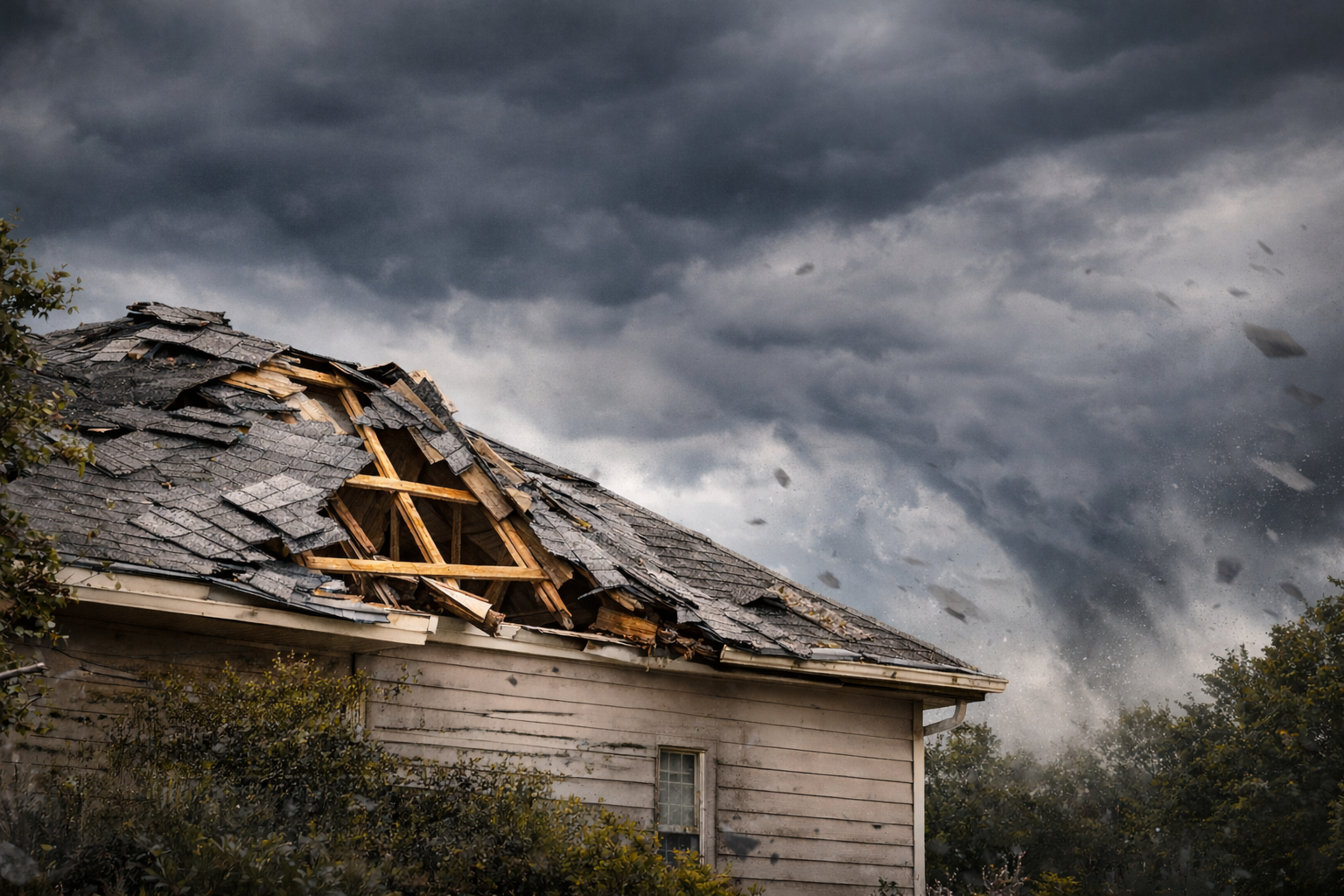
- Roof damage is the most-filed and most-underpaid Hurricane Helene claim type across South Carolina.
- Insurers routinely cite "wear and tear" or "pre-existing damage" to deny legitimate storm claims — both can be challenged with the right evidence.
- Under S.C. Code § 38-59-40, bad faith conduct can entitle homeowners to recovery beyond the policy limits.
- You generally have three years from the date of loss to file suit — but evidence preservation starts now.
Why roof claims get underpaid
Hurricane Helene tore through South Carolina in late September 2024, leaving thousands of homeowners staring at tarped roofs and unanswered phone calls. If you filed a claim and got back an estimate that didn't come close to covering the repair cost, you're not imagining it. Roof damage is the single most-filed claim type after Helene — and the single most likely to be underpaid.
Insurance companies don't reflexively pay full value on roof claims because the math punishes them when they do. A complete roof replacement on a typical SC home runs $14,000 to $35,000. So adjusters are trained, often explicitly, to find any reason to scope a repair instead of a replacement. That's not bad faith on its own. It's their job. Bad faith starts when the reasons given don't match what's on your roof.
The four tactics insurers use to underpay roof claims
After dozens of denied and underpaid Helene claims across South Carolina, we've seen the same playbook on repeat. Recognize these and you can challenge them.
1. The "wear and tear" denial
The adjuster's report cites general aging, granule loss, or worn shingles as the cause of damage rather than the storm. South Carolina policies cover damage from a covered peril — wind, in this case — even if the underlying material was old.
The legal question isn't "was the roof old?" but "did the storm cause this specific damage?"
2. Splitting damage between covered and excluded perils
Your policy covers wind. It probably excludes flood. Helene caused both. The adjuster scopes most of your roof damage as "flood-related" — even though the wind tore the shingles off before the rain ever entered the structure.
Evidence that wins roof damage claims
The carriers' tactics above all share a weakness: they collapse the moment you produce specific, dated, location-tied evidence that contradicts them. The strongest claims combine four evidence types: independent inspection reports, pre-storm imagery, NOAA weather records for the date and county of loss, and multiple contractor estimates.
South Carolina's statute of limitations
You generally have three years from the date of loss to file suit on a property damage insurance claim under SC law. Helene struck September 26-27, 2024. That gives most homeowners until late September 2027.
When underpayment crosses into bad faith
Most carrier behavior is just adversarial — annoying, but legal. Bad faith is different. Under S.C. Code § 38-59-40, bad faith conduct entitles policyholders to recovery beyond the policy limits, including consequential damages and attorney's fees.
What to do right now
Whether your claim was just filed or has been denied for months, the next steps are the same:
- Document everything you have now — every photo, email, letter, voicemail.
- Don't sign anything labeled "release" or "final settlement" without an attorney reviewing it first.
- Get a written estimate from an independent roofer.
- Request your full claim file from the carrier in writing — they have to provide it.
- Talk to an attorney before the carrier's deadline runs.
The system is built to wear you down. The good news is it's also built on rules — and when you know the rules, the leverage shifts.
Frequently asked questions
How much does it cost to hire a property damage attorney in South Carolina?
Most reputable property damage firms — including ours — work on contingency. You pay no attorney's fees unless we recover money for you. Initial case reviews are always free.
Can I still file a claim if I already accepted a partial payment?
Often, yes. Accepting a payment is not the same as signing a release. If the insurer underpaid the actual cost of repair, you may be entitled to additional recovery. The key is whether you signed a document explicitly waiving further claims.
What if my claim is older than three years?
The statute of limitations is generally three years from the date of loss for SC property damage claims, but exceptions can apply — particularly when bad faith is involved. Don't assume your case is closed without an attorney's review.
Do you handle Helene claims outside Charleston?
Yes — we represent SC homeowners statewide, including Anderson, Aiken, Greenville, Spartanburg, Columbia, Myrtle Beach, and surrounding areas.
Talk to a property damage attorney today.
Free case review. No fee unless we recover. We read your policy, review your adjuster's scope, and tell you straight whether you have leverage.
Get Your Free Case Review