- Amica is a direct writer — it sells and services policies through its own representatives rather than independent agents — and is consistently rated highly for customer service and claims handling. A strong service reputation doesn't mean every claim is paid in full, and the same KY legal framework applies.
- Amica offers a dividend policy option that can return a portion of premium, and its coverage is often endorsement-driven — meaning what a specific Amica policy covers depends heavily on which endorsements were added. Reading the declarations page and endorsement schedule matters.
- Contested KY Amica claims commonly turn on sudden-versus-long-term water characterization, sewer-backup endorsement questions, wind and hail roof scope, and matching on partial repairs under Kentucky's matching regulation.
- Kentucky recognizes a bad-faith framework under the Wittmer standard and provides for 12% interest under KRS 304.12-235 when a carrier fails to make a good-faith attempt to settle after a proper proof of loss — which makes a sworn proof of loss an important step.
- At Property People Law, we review KY Amica claims and any denial at no cost. Our KY residential and commercial property damage work is generally on contingency — we only get paid from the recovery, not your pocket.
Amica holds a strong reputation in property insurance — it consistently ranks at or near the top of customer-satisfaction and claims-handling surveys, and it operates as a direct writer, selling and servicing policies through its own representatives rather than through independent agents. For many Kentucky homeowners who value service and a direct relationship with their insurer, Amica is a deliberate choice, and frequently a good one.
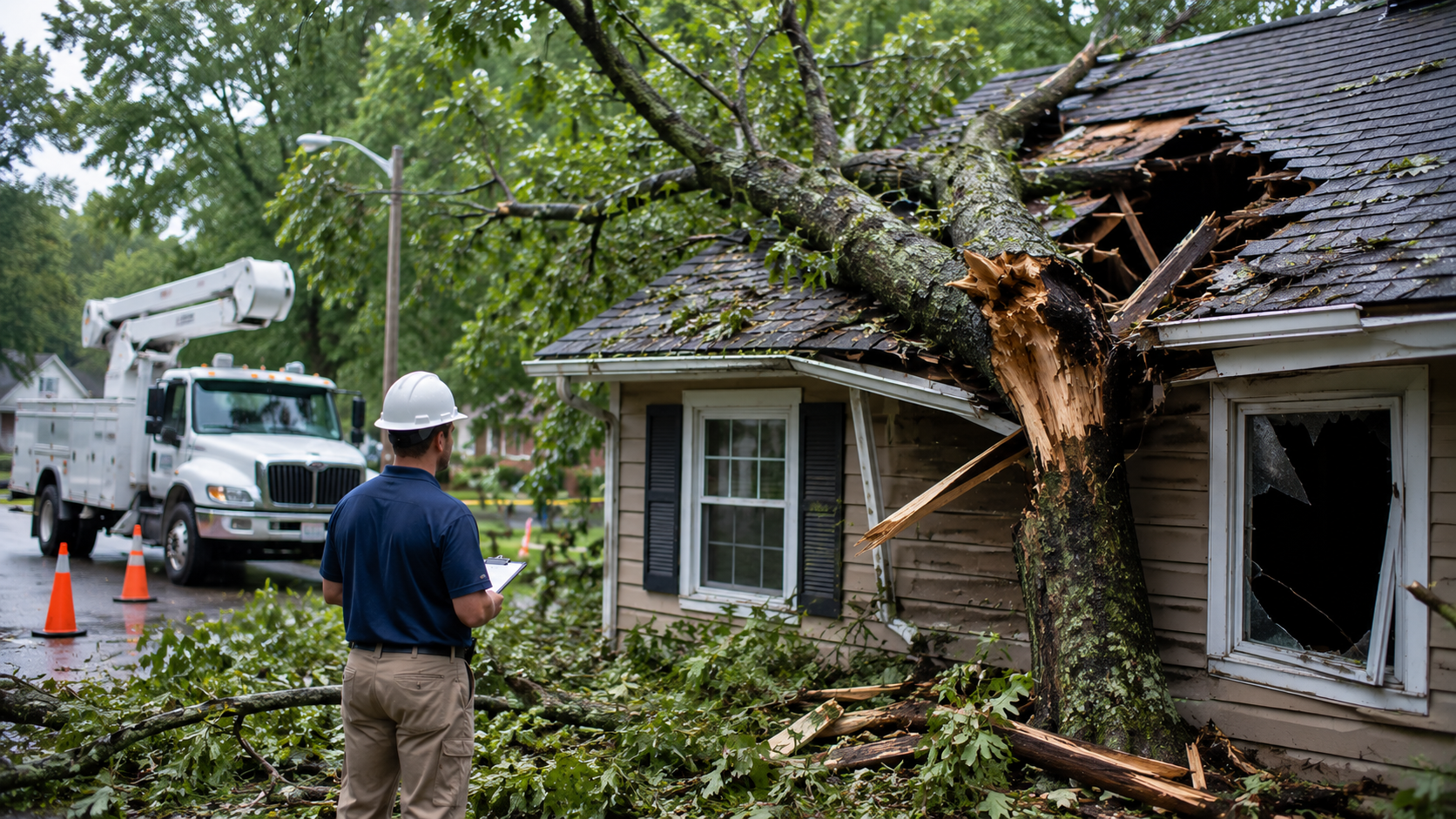
A strong reputation, though, doesn't change a basic reality: not every claim is paid the way the policyholder believes it should be. Even highly rated carriers contest claims, apply exclusions, scope repairs narrowly, and depreciate aggressively. When that happens with an Amica policy in Kentucky — after a tornado, a hailstorm, straight-line wind, or a basement water loss — the policyholder has the same rights and the same legal framework available as with any carrier. The fact that Amica is generally well-regarded doesn't make a particular denial or underpayment correct.
This article walks through how Amica's direct-writer and dividend-policy model works, what KY Amica policies generally provide, six considerations for KY policyholders with contested claims, how the Wittmer bad-faith framework and the 12% interest rule apply, and how we at Property People Law approach contested KY Amica claims. Every policy is different, every claim turns on its own facts.
How Amica's Direct-Writer and Dividend-Policy Model Works
Amica is a direct writer, meaning it sells policies and handles claims through its own employees and representatives rather than through a network of independent agents. For a policyholder, this means the company on the declarations page is Amica (or an Amica subsidiary), and the claim is handled by Amica's own claims operation — there's no independent agent intermediary in the relationship.
Amica is also distinctive for offering two policy structures: a standard policy and a dividend policy. The dividend policy generally costs more up front but may return a portion of the premium to the policyholder through a dividend if certain conditions are met. This affects pricing and potential premium return, not the coverage analysis on a claim — a dividend policy and a standard policy provide the same coverage for the same loss; the difference is in the premium structure. Amica also offers tiered coverage, including a more comprehensive package option, and a range of endorsements.
None of this changes the governing law. Kentucky insurance law, the Unfair Claims Settlement Practices Act, and the Wittmer bad-faith framework apply to an Amica policy exactly as they apply to any KY property insurer. The direct-writer model and the dividend structure shape the policyholder's relationship and pricing — not the legal standards that govern a claim.
What KY Amica Policies Generally Provide on Residential Property
KY Amica homeowners products are generally written on an HO-3-style form, with the dwelling and other structures on an open-peril basis subject to exclusions, and personal property on a named-peril basis — or, on the more comprehensive package option, broader coverage including open-peril contents and replacement-cost terms. Amica's coverage is often endorsement-driven, so what a specific policy covers depends meaningfully on which endorsements the policyholder added.
Kentucky's risk profile is different from the coastal states: rather than hurricanes, KY Amica policyholders face severe thunderstorms, tornadoes, hail, straight-line wind, and water-related losses. Two coverage areas deserve particular attention. First, the sewer or drain backup endorsement: standard policies generally exclude backup through sewers and drains unless a specific endorsement was purchased, which matters in basement-heavy KY housing stock. Second, the sudden-versus-long-term water distinction: water coverage generally turns on whether a loss was sudden and accidental (often covered) or gradual seepage over time (generally excluded). Our KY sudden-vs-long-term water damage guide covers that line.
As with any policy, resulting mold damage generally carries a sublimit, roof coverage may be written on a replacement-cost or actual-cash-value basis depending on the roof's age and the policy terms, and the notice and mitigation conditions apply. The specific language in your policy and on your declarations page controls — reading both, including the endorsement schedule, before storm season is the cheapest claim-protection step a KY property owner can take.
Six Considerations for KY Amica Policyholders with Contested Claims
When a KY Amica claim is contested, several considerations tend to drive how it resolves. None is unique to Amica — they're the same dispute categories that follow most KY property losses — but they recur on these claims.
- Confirm the named insurer and the endorsement schedule. Identify the exact Amica entity on the declarations page and review which endorsements were added, because Amica coverage is endorsement-driven and what's covered depends on what was actually included. Note that whether you hold a standard or dividend policy doesn't change the coverage — both provide the same protection for the same loss.
- Determine the source of any water loss. On a KY water claim, the source generally drives coverage. A burst supply line or failed appliance is often a sudden, covered event; a backed-up sewer or drain is analyzed under the backup exclusion and may depend on whether an endorsement was purchased; groundwater seepage points toward long-term and may implicate maintenance exclusions. Confirm the source and the endorsement status before accepting a denial premised on the backup exclusion.
- Scrutinize wind and hail roof characterization. KY's severe-storm exposure produces frequent wind and hail roof claims. Disputes often turn on whether the carrier acknowledged functional damage or characterized it as cosmetic, and whether the scope matches an independent roofer's assessment. Compare the carrier's scope against an independent estimate.
- Examine sudden-versus-long-term water characterization. Water coverage generally turns on whether the loss was sudden and accidental (covered) or long-term seepage (excluded). A denial that characterizes a sudden failure — a burst pipe, a failed water heater — as long-term may not hold up when the failure mode and timeline support a sudden event. Our KY sudden-vs-long-term water damage guide covers this.
- Raise matching under 806 KAR 12:095. When a storm damages part of a roof or one elevation, Kentucky's matching regulation generally requires reasonable uniformity with existing materials, which may support expanded scope when partial repair would leave a visibly mismatched result. This is a KY-specific tool worth invoking on partial-repair disputes.
- Document, report promptly, and submit a proof of loss. Date-stamped photos before mitigation, an independent contractor's scope, prompt written notice, and mitigation receipts all support the claim. Submitting a written, sworn proof of loss also positions the 12% statutory interest mechanism, which begins 30 days after the carrier receives the proof of loss if the carrier fails to settle in good faith.
How the Wittmer Bad-Faith Framework and 12% Interest Apply
Most contested KY Amica claims are ordinary coverage or scope disputes — the carrier reached one conclusion, the policyholder disagrees, and the evidence decides which position holds. That's the normal terrain of a property claim and doesn't by itself implicate any bad-faith framework, regardless of the carrier's reputation.
Where the analysis may move toward the Wittmer bad-faith framework is when the carrier denies a covered claim without a reasonable basis. Under Wittmer v. Jones (1993), the elements are that coverage existed under the policy, the carrier denied or refused to pay without a reasonable basis, and the carrier either knew there was no reasonable basis or acted with reckless disregard for whether one existed. Aggressive mischaracterization of a covered loss — calling a sudden water failure long-term, denying documented hail damage as cosmetic without engaging the evidence — may meet the second and third elements.
Two KY-specific remedies follow when the framework applies. Wittmer may allow attorney's fees, consequential damages, and potentially punitive damages on the right facts. And under KRS 304.12-235, when the carrier fails to make a good faith attempt to settle, the settlement value bears interest at 12% per year beginning after the expiration of 30 days following the carrier's receipt of formal proof of loss — which is why submitting a written, sworn proof of loss matters on contested claims. Whether the framework applies depends on the carrier's actual conduct, not its reputation. See our KY bad-faith pillar for the full framework.
How Property People Law Approaches Contested KY Amica Claims
When a KY Amica policyholder reaches out about a denied or underpaid claim, the first conversation is free and the framework is consistent. We read the policy and declarations page carefully — the named insurer, the endorsement schedule, the sewer-backup endorsement status, the roof-settlement basis, the water and exclusion provisions, and the notice and mitigation conditions. We pull the claim file and any engineering or adjuster report the position relied on.
From there we compare the carrier's position against the physical evidence, an independent contractor's scope, and the failure mode or storm sequence. We identify where the covered characterization is supportable, whether a backup endorsement changes the analysis, where matching under 806 KAR 12:095 and recoverable depreciation add to the claim, and whether the carrier's conduct may support a Wittmer bad-faith argument with its fee, consequential-damage, and 12%-interest framework. We work alongside KY property owners across every step.
Our KY residential and commercial property damage work is generally on contingency — we only get paid from the recovery, not your pocket. Past results in other cases don't guarantee outcomes in any new matter, and every claim turns on its own facts.