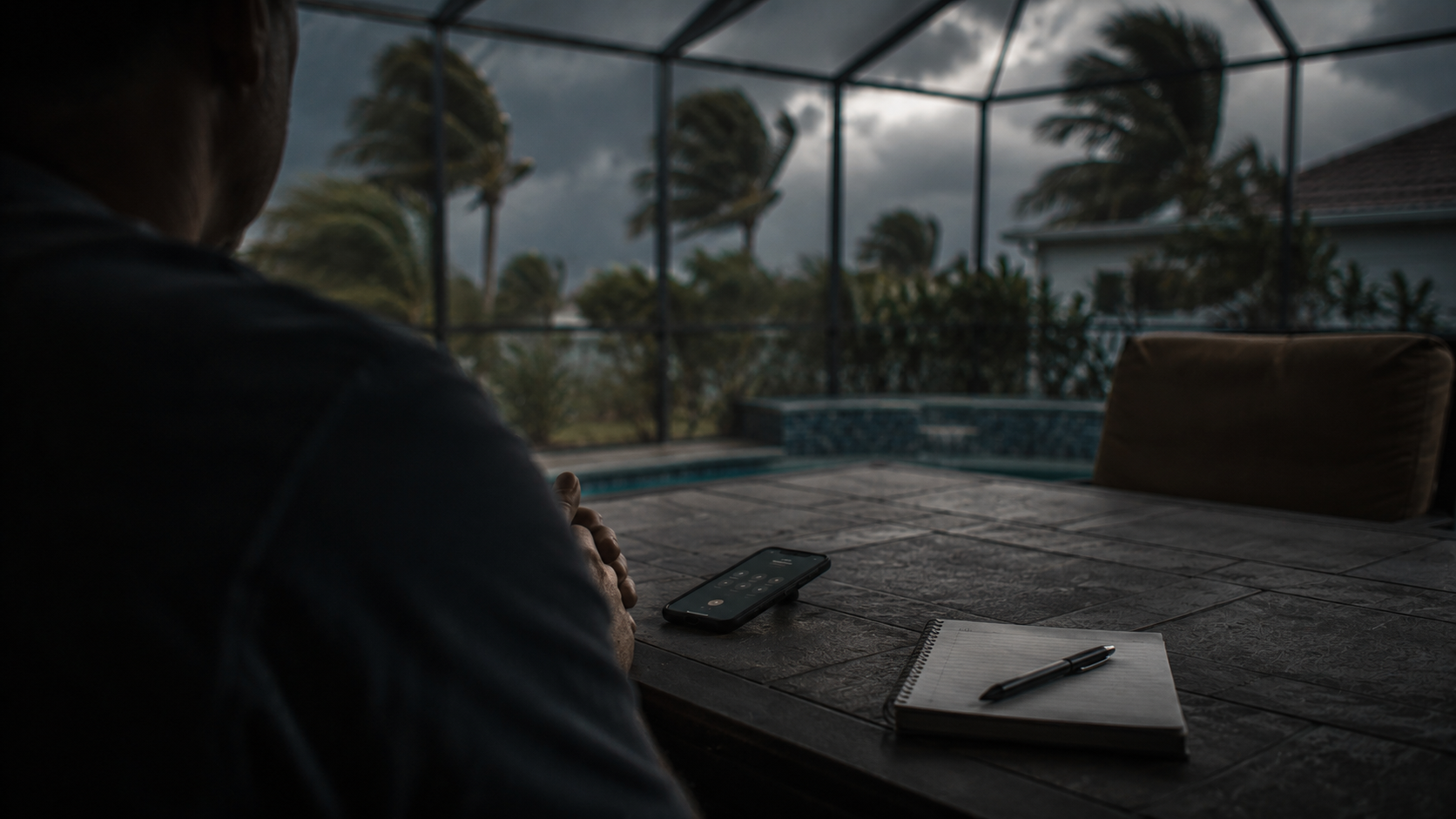
- A recorded statement is the informal, unsworn interview an adjuster requests in the first days of a claim — usually by phone, usually framed as routine, and fundamentally different from the formal examination under oath the policy separately authorizes.
- Florida's leading EUO case itself draws the line: a recorded statement is not a substitute for an examination under oath — the two are different devices, and the strict forfeiture rules attached to the Florida EUO do not convert the adjuster's early phone interview into the same obligation.
- No Florida statute compels a first-party policyholder to give a recorded statement on the adjuster's timeline — the only contractual hook is the policy's general cooperation clause, which requires reasonable cooperation, not an immediate recorded interview in the fog of a fresh loss.
- The risk runs one direction: an early recorded statement, given before the damage is fully known, becomes a fixed record the carrier can mine for inconsistencies later — which is why timing, preparation, and counsel matter more than the adjuster's framing suggests.
- At Property People Law, we review recorded-statement requests and the claims behind them at no cost. Our FL residential and commercial property work is generally on contingency — we only get paid from the recovery, not your pocket.
Within days of reporting a Florida property loss — sometimes within hours — the adjuster's call comes: 'I just need to get a quick recorded statement to process your claim.' The framing is deliberate: routine, harmless, a box to check. And for many policyholders, that early phone interview becomes the single most consequential thing they do on the claim — not because the statement helps the claim, but because it fixes a permanent record before the policyholder knows the full extent of the loss.
Florida policyholders deserve the straight legal picture. The recorded statement is not the examination under oath — Florida's own leading EUO decision says the two devices are not interchangeable. No Florida statute compels a first-party recorded statement on the adjuster's schedule. The only contractual hook is the policy's general cooperation clause, which requires reasonable cooperation with the claim investigation — a duty with real content, but considerably more flexible than the adjuster's framing implies.
This guide explains what a recorded statement is and how it differs from the EUO, what the cooperation clause actually requires in Florida, how recorded statements get used later, six considerations before giving one, the legal framework around statement disputes, and how we at Property People Law approach these requests. Every policy is different, every claim turns on its own facts.
What a Recorded Statement Is — and Why It Isn't the EUO
A recorded statement is an informal claims-investigation interview: the adjuster asks questions about the loss — what happened, when, what was damaged, what's been done since — and records the call. It is unsworn, conducted by a claims adjuster rather than counsel, untranscribed by a court reporter, and typically requested in the claim's earliest days, before estimates exist and often before the policyholder has seen everything the loss did.
Florida property policies separately authorize a very different device: the examination under oath — formal, sworn, transcribed, conducted by the carrier's counsel under a specific policy condition that Florida courts enforce strictly. The state's leading EUO decision drew the line expressly: a recorded statement is not a substitute for an examination under oath, because the two serve different purposes. That line cuts both ways — giving a recorded statement doesn't satisfy an EUO demand, and the forfeiture rules attached to Florida's EUO condition don't attach to the adjuster's informal phone request.
Understanding which request is on the table is the first step every time. An EUO demand — a formal letter, a date, the carrier's counsel — is a claim-critical event with strict consequences, covered in our Florida EUO guide. A recorded-statement request is a different conversation entirely, governed by a different and far more flexible obligation: the cooperation clause.
What the Cooperation Clause Actually Requires in Florida
The cooperation clause obligates the insured to cooperate with the carrier's investigation — provide information about the loss, make the property available for inspection, submit the documents the policy requires. It is a real duty, and a policyholder who stonewalls a legitimate investigation creates genuine risk. But cooperation is a standard, not a script: nothing in the typical clause converts 'cooperate' into 'give a recorded interview within 72 hours of the loss, alone, on the adjuster's framing.'
No Florida statute compels a first-party policyholder to give a recorded statement, and the policy's specific sworn-testimony tool is the EUO — which comes with formal protections precisely because it carries formal consequences. The practical translation: a Florida policyholder can generally satisfy the cooperation duty through reasonable means — written claim information, documentation, inspection access, and a statement given when prepared, with counsel involved — rather than on the adjuster's preferred timeline.
The distinction matters even more for third parties. A claimant who isn't the carrier's insured — a neighbor whose property was damaged, a third-party claimant against someone else's policy — has no contract with that carrier at all, and no cooperation duty to it. Adjusters request recorded statements from third parties routinely; third parties are generally free to decline entirely, and usually should until they've had advice.
How Recorded Statements Get Used Later
The carrier's institutional purpose for the early recorded statement is the record. A statement given days after a loss — before the tarps come off, before the contractor opens the walls, before the full inventory exists — fixes the policyholder's account at its least informed moment. Every later development the statement didn't mention becomes material for an argument: the damage described then was smaller, the cause described then was different, the timeline shifted.
That is impeachment value, and it works in ordinary, innocent ways. A homeowner who tells the adjuster 'the roof leaked in the bedroom' before discovering water tracked through three more cavities hasn't lied — but the recorded statement now reads narrower than the claim, and the gap will be used. Speculation is the other trap: guesses about cause, timing, or pre-existing conditions, offered helpfully in conversation, become fixed admissions the policyholder never intended to make.
None of this makes the recorded statement inherently avoidable or always harmful — a prepared, accurate statement given at the right time can move a claim along. The point is sequencing and control: the statement should happen when the policyholder actually knows the facts, has reviewed the documentation, understands the policy, and — on any significant or contested claim — has counsel involved. The adjuster's urgency serves the carrier's record; the policyholder's preparation serves the claim.
Six Considerations Before Giving a Recorded Statement in Florida
The request usually arrives before the policyholder has advice. These six considerations frame how to handle it well.
- Identify which request this actually is. An informal recorded-statement request from the adjuster and a formal EUO demand from the carrier's counsel are different events with different rules — Florida enforces the EUO strictly, while the recorded statement rests only on the cooperation clause. Read the request, and if it's a formal demand letter, treat it as the claim-critical event it is.
- Don't confuse declining-for-now with non-cooperation. Cooperation requires reasonable participation in the investigation — not an immediate recorded interview. Offering claim information in writing, providing documents, scheduling the inspection, and deferring the recorded statement until prepared is cooperation. Communicate the deferral professionally and keep the record of engagement.
- Never give a statement in the fog of the first days. The early statement locks in an account formed before the loss is fully known — the single most common way policyholders undercut their own claims. Wait until the property has been properly inspected, the scope is documented, and the facts are actually known. The claim doesn't suffer for accuracy; it suffers for premature certainty.
- Involve counsel before, not after. On a significant or contested claim, route the request through counsel: scheduling, scope, and preparation all change when the policyholder isn't navigating alone. Counsel can also assess whether a recorded statement serves the claim at all, or whether written information satisfies the cooperation duty better.
- If you give one: facts, not guesses. Answer what you know, accurately and briefly. 'I don't know yet' is a complete answer about cause, timing, or extent still being investigated — speculation offered in helpfulness becomes the carrier's exhibit. Stick to observed facts and let the documentation carry the detail.
- Request the recording or transcript and keep it. Whatever you said belongs in your file too. Ask for a copy of the recording or transcript, review it for accuracy, and correct errors in writing promptly. The statement is part of the claim record either way — make sure your version of the record matches the carrier's.
Florida's Legal Framework Around Recorded Statements
Florida's framework distinguishes the devices cleanly. The examination under oath is a specific policy condition Florida courts enforce strictly — and the state's leading EUO decision expressly held that a recorded statement is not its substitute, confirming the two are legally distinct. The recorded statement itself rests on the policy's general cooperation clause: a duty of reasonable cooperation with the investigation, with no Florida statute compelling a first-party recorded interview on the carrier's timeline.
Cooperation disputes are evaluated on the whole record — what the carrier reasonably requested, what the policyholder actually provided, and whether any shortfall mattered to the investigation. A policyholder who engages the claim professionally — documents produced, inspection accommodated, information provided in writing, statement deferred until prepared — builds exactly the record that defeats a non-cooperation argument. A policyholder who goes silent builds the opposite one.
Around the statement sit the policy's concealment-or-fraud provisions — a knowingly false statement of material fact in the claim process creates exposure whether sworn or not — and Florida's post-reform claim-handling landscape, which governs the remedies available when a carrier's conduct around the investigation is unreasonable. How those pieces apply to a specific claim depends on the policy language and the record, which is exactly the analysis worth running with counsel before the statement happens.
How Property People Law Approaches Recorded-Statement Requests
When a Florida property owner calls about a recorded-statement request — before giving one, or after one that went badly — the first conversation is free and the framework is consistent. We identify which request is actually on the table, read the policy's cooperation and examination conditions, and assess where the claim stands: what's documented, what's still unknown, and what the carrier appears to be probing for.
From there we manage the sequencing: cooperation maintained in writing, inspection and documentation moving forward, and the statement — if one serves the claim — given when the policyholder is prepared, with counsel involved, on facts actually known. If a statement already exists, we obtain it, review it against the documented record, and address any gaps or inaccuracies in writing before they harden into the carrier's narrative.
Our FL residential and commercial property work is generally on contingency — we only get paid from the recovery, not your pocket. Past results in other cases don't guarantee outcomes in any new matter, and every claim turns on its own facts.