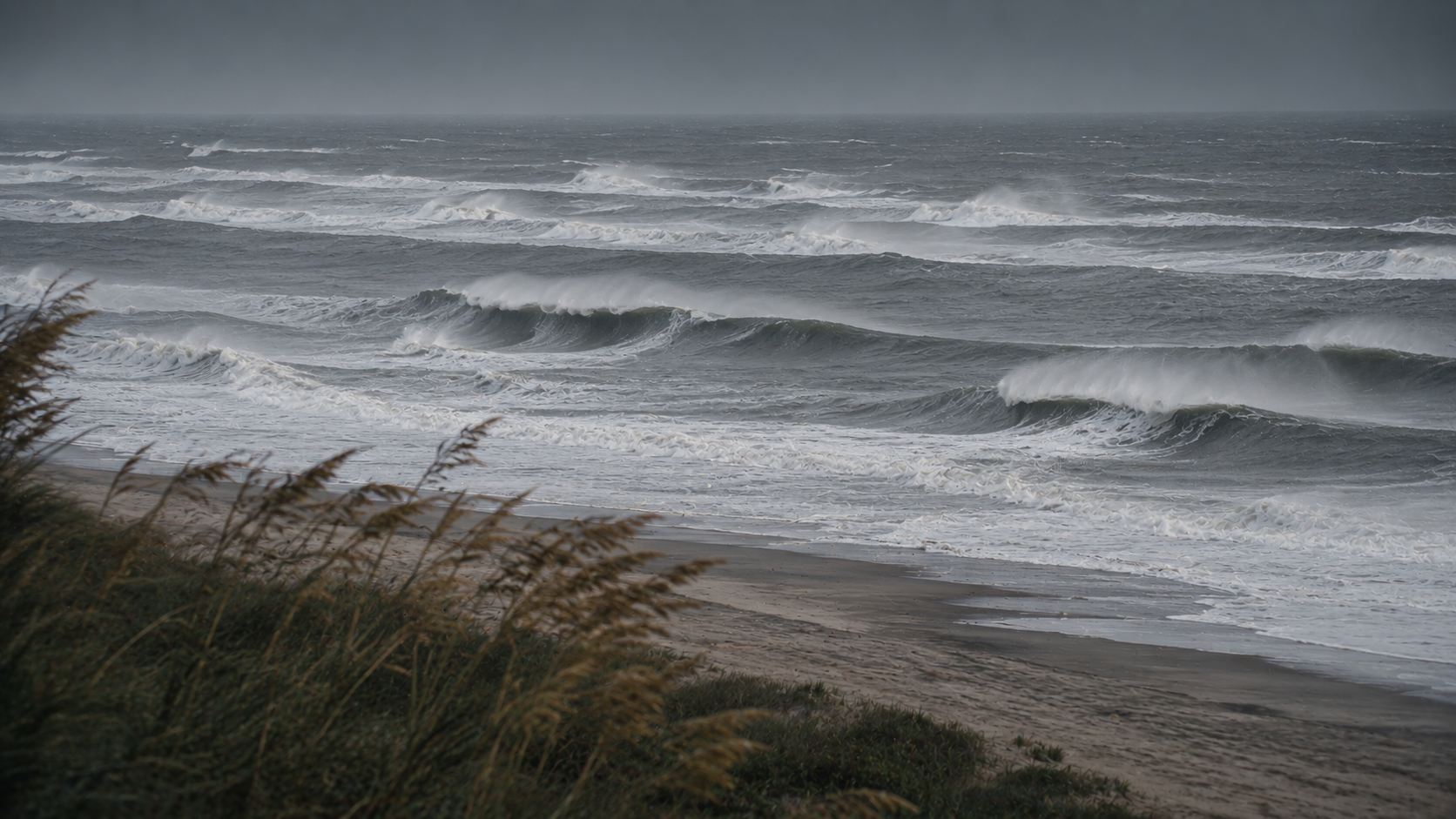
- Hurricane Erin passed well offshore in August 2025, yet its wind field and waves brought tropical-storm conditions to the Outer Banks — flooding the main highway, breaching dunes, and damaging oceanfront homes and businesses.
- Whether a hurricane or named-storm percentage deductible properly applies to a no-landfall loss turns entirely on the policy's trigger language, and triggers vary widely.
- Wind and wind-driven rain damage are generally covered; ocean overwash and rising water generally are not, and gradual erosion is generally excluded — separating the three on the evidence is the heart of an Erin claim.
- Seasonal rentals and coastal businesses lost peak weeks to evacuation and highway closure; commercial time-element coverage deserves a careful read where it exists.
- At Property People Law, we review Erin claims, estimates, and denial letters at no cost. Our NC residential and commercial property work is generally on contingency — we only get paid from the recovery, not your pocket.
Hurricane Erin never touched the United States coastline. At its peak it was a powerful major hurricane far out in the Atlantic, and its center stayed hundreds of miles east of North Carolina as it curved north in late August 2025. The Outer Banks felt it anyway: days of pounding surf, tropical-storm conditions, ocean overwash that closed the islands' lifeline highway, and water surging beneath oceanfront homes.
No-landfall storms produce a distinctive kind of insurance claim. The damage is real, but it arrives by paths — waves, overwash, undermined footings, wind-driven rain — that policies treat very differently from one another. And because no hurricane ever arrived in the policy-trigger sense at many locations, the deductible a carrier applies deserves as much scrutiny as the estimate itself.
This guide covers what Erin did to the Outer Banks, the coverage architecture those losses run into, and the steps that protect a claim like this. Every policy is different, every claim turns on its own facts.
What Erin Did Without Making Landfall
As Erin's outer bands brushed the coast in the third week of August 2025, conditions on Hatteras Island deteriorated through successive high tides. Waves broke through dune lines and poured across N.C. Highway 12 — the single road connecting the villages — submerging sections north of Hatteras Village and forcing its closure, while the ferry connection to Ocracoke was cut. Dare and Hyde counties had ordered evacuations ahead of the storm, and residents returned afterward under a phased reentry-permit system.
The water did real work on buildings. Oceanfront neighborhoods in Hatteras Village and Buxton flooded; sand buried driveways and ground-level spaces, with damage reported to the lower levels of beachfront lodging properties; a water main broke in the eroded shoreline at Buxton, putting the area under a boil advisory. In Rodanthe, two oceanfront stilt houses stood teetering in the surf with their footings undermined — on a stretch where eleven neighboring homes have fallen into the ocean since 2020.
Surveying the aftermath, the governor noted that flooding and high winds had affected Outer Banks roadways even though Erin remained offshore, and that the highway closure had cut off small businesses at the height of the season. That is the no-landfall paradox in one sentence: no hurricane arrived, and the damage came anyway.
Three Damage Paths, Three Coverage Answers
Erin's losses sort into three categories that standard policies treat differently. Wind damage and wind-driven rain through storm-created openings are generally covered windstorm losses — and the Outer Banks saw genuine tropical-storm-force conditions, so wind components of these claims are real, not theoretical.
Ocean overwash and water rising into or under a structure are a different lane: standard homeowners and commercial policies generally exclude rising water as flood, which is the province of separate flood policies with their own terms. And gradual beach erosion — the slow loss of ground that made several of these properties vulnerable in the first place — is generally excluded under property and flood forms alike, though a sudden storm-driven loss of supporting land can present harder, more technical questions.
Most Erin losses mix the lanes: wind-damaged roofing above, sand and seawater below, on a lot that has been losing beach for years. The claim outcome turns on disentangling them honestly — assigning each element of damage to its actual cause with photographs, elevation evidence, and timing — rather than letting the whole loss be labeled with whichever single word costs the most coverage.
What Coastal North Carolina Policies Generally Provide
Outer Banks property insurance is often layered. Many coastal owners carry wind coverage through the state's coastal wind pool — the Beach Plan — alongside an underlying policy that excludes wind, while others have wind within a single package; flood coverage, where it exists, is a separate policy again. Knowing which policy answers for which peril is step one of any claim here, because each comes with its own deductible, conditions, and adjuster.
Percentage deductibles are the second structural feature. Hurricane and named-storm deductibles on coastal forms are commonly calculated against the dwelling limit, and their triggers vary: some require a hurricane as classified at specified locations or times, others key to named-storm warnings or defined windstorm events. A no-landfall storm is precisely where those definitional differences become dollars.
The usual conditions ran through this event too — prompt notice, reasonable mitigation, cooperation — with a coastal twist: access. Evacuation orders and the reentry-permit process meant owners could not lawfully reach their property for days. Mitigation duties are read against reasonable access, but the safe practice is to document the timeline: when you left, when reentry opened for your priority tier, when you returned, and what you did first.
Six Steps for an Erin Claim
These steps address the specific pressure points of a no-landfall coastal loss.
- Check the deductible trigger before accepting the math. Identify exactly which deductible the carrier applied, then read the trigger language against what actually occurred at your location — a storm that never made landfall and never generated certain warnings may not have met a hurricane trigger at all. The difference between a percentage deductible and the standard one is often the largest single number in the claim.
- Sort the loss into its three lanes. Walk the property and assign each element of damage — roof, siding, openings, under-structure, contents — to wind, water, or erosion on the evidence. The sorted version of the claim is the honest version, and it is also the one that protects every dollar of genuinely covered wind damage.
- Prove the pre-storm condition. On a chronically eroding coastline, carriers reasonably ask what was already failing before Erin. Pre-storm photographs, rental listings, inspection reports, and maintenance records are the rebuttal — gather them now, because they answer the wear-and-erosion attribution argument better than anything written after the fact.
- Commercial and rental owners: read the time-element coverage. Lost peak-season weeks from evacuation, highway closure, and repairs may implicate business income, extra expense, or civil-authority provisions where a commercial policy includes them — these clauses are technical and trigger-specific, and they reward a careful read rather than an assumption either way.
- Document access limits and mitigation timing. Keep the evacuation order, your reentry permit and date, and receipts for the protective work done once access opened. That record both satisfies the mitigation condition and explains any interval the carrier might otherwise attribute to neglect.
- Anchor the sequence with official records. Weather service statements, tide and overwash reporting, road-closure records, and county emergency declarations time-stamp the event at your location — useful both for causation and for distinguishing Erin's damage from ordinary seasonal wear.
North Carolina's Legal Framework for Claim Disputes
The legal backdrop for an Erin dispute is the same framework that governs every North Carolina property claim — the unfair-and-deceptive-practices statute, the unfair-claim-settlement-practices catalog, and the Insurance Commissioner's late-2024 storm-handling bulletin as recent context — covered in depth in our Tropical Storm Chantal guide.
The practical takeaway for an Outer Banks policyholder is simpler: claim-handling conduct has enforceable standards behind it, honest disagreement is not misconduct, and whether a particular Erin file supports statutory remedies is a case-specific legal question a review can answer.
How Property People Law Approaches Erin Claims
We start with a no-cost diagnosis: the full policy stack — wind, underlying, and flood where present — the deductible endorsements, the carrier's estimate, and your photo record, read together. The first conversation should leave you knowing which policy answers for which damage, whether the deductible applied was the right one, and where the genuine disputes are.
Where we take a matter on, the work is evidence-first: lane-by-lane causation documentation, pre-storm condition reconstruction, trigger analysis against the storm record, and escalation through supplement, appraisal where available, or litigation when the facts call for it.
Our NC residential and commercial property work is generally on contingency — we only get paid from the recovery, not your pocket. Past results in other cases don't guarantee outcomes in any new matter, and every claim turns on its own facts.