- Lowcountry Helene claims are uniquely complicated by the wind-vs-flood coverage question. Storm surge is legally flood, not wind — insurers commonly attribute coastal damage to flood (no homeowners coverage) when it was wind-driven. Engineering evidence defeats this.
- Hurricane deductibles in SC coastal policies are typically 2–5% of dwelling limit, triggered by specific named-storm conditions. Verify the deductible was correctly applied to your specific loss — some insurers misapply it.
- Charleston historic district properties have preservation-required premiums that standard insurer estimates don't account for. Push back on standard-grade material substitutions with documentation of BAR or Historic Charleston Foundation requirements.
- Live oak and palm tree removal costs frequently exceed standard policy sublimits ($2,500–$5,000 aggregate vs. $5K–$15K per tree). Document the full scope across structural, landscape, fence, and vehicle damage categories.
- For Lowcountry properties with both homeowners and NFIP coverage, correct allocation between the two policies is a technical and legal question. NFIP's 60-day Proof of Loss and 1-year suit deadlines run separately from SC's 3-year SOL.
What Hurricane Helene did to the South Carolina Lowcountry
Hurricane Helene moved through South Carolina on September 27, 2024, and the Lowcountry took some of the state's earliest and most concentrated hits. Charleston, Beaufort, and Jasper counties — already perched at the intersection of tidal waterways, coastal marshes, and dense live oak canopy — experienced a sustained combination of tropical-force winds, wind-driven rain, downed trees, storm surge at the coast, and inland flooding in low-lying neighborhoods.
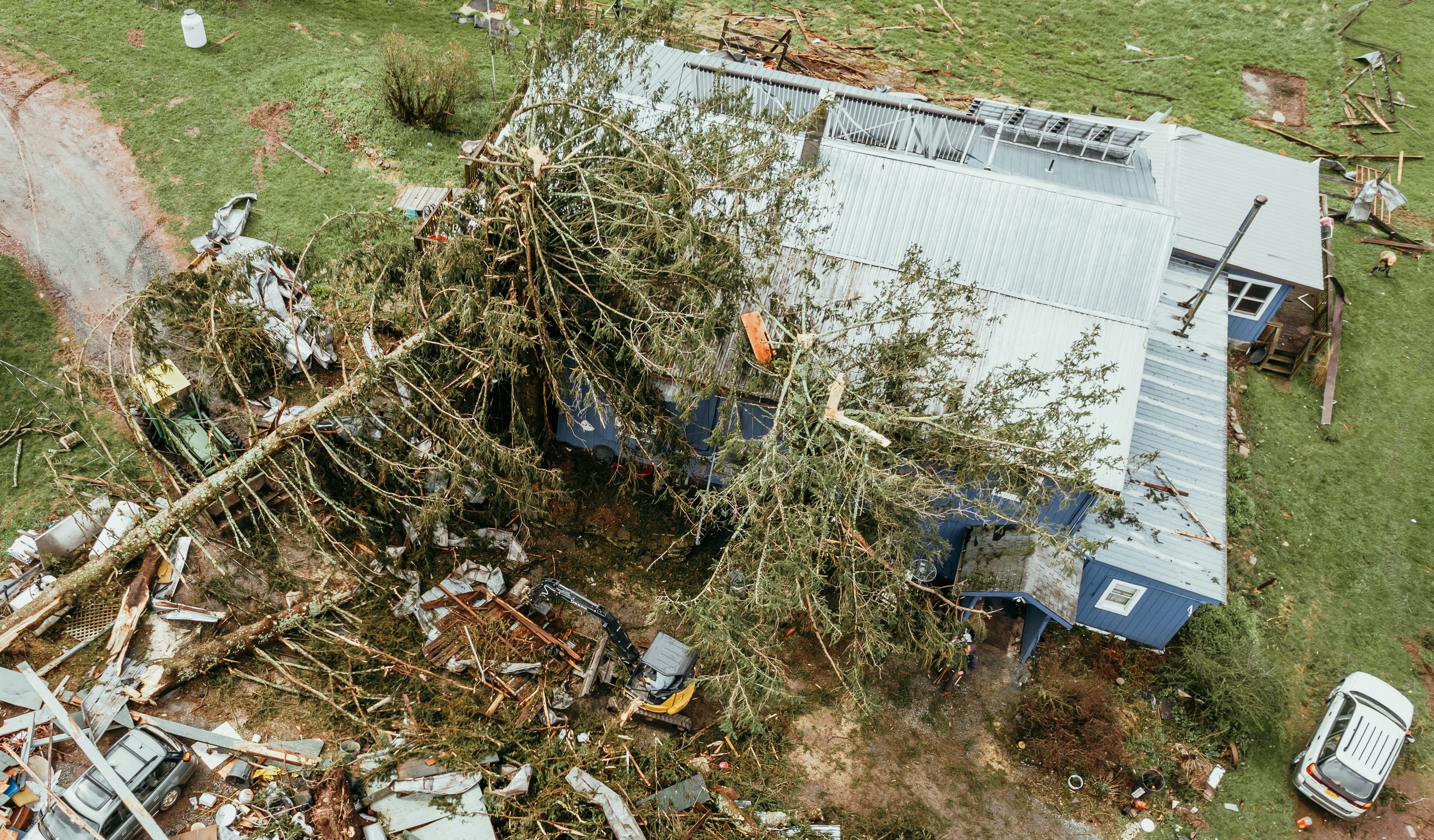
The damage pattern across the tri-county area was distinctive. Wind ripped shingles and damaged roofing from Mount Pleasant to Summerville. Massive live oaks crushed roofs and outbuildings throughout downtown Charleston's historic districts. Storm surge pushed water into coastal homes from Folly Beach to Hilton Head. River and creek flooding affected inland neighborhoods in Jasper County. Power was out for days in parts of the region; debris cleanup stretched for months.
The follow-on insurance claim wave was equally distinctive. Lowcountry homeowners discovered that the coastal geography that makes the region so valuable also makes their insurance claims uniquely complicated — the wind-vs-flood coverage question is sharper here than anywhere else in SC.
The wind-vs-flood coverage question (the central Lowcountry battle)
Standard SC homeowners policies cover wind damage. They do NOT cover flood damage. Flood requires separate coverage through the National Flood Insurance Program (NFIP) or a private flood carrier. Storm surge — the wall of seawater pushed inland by hurricane winds — is legally classified as flood, not wind.
For coastal Lowcountry properties hit by Helene, the insurer's first move is often to attribute damage to flood (no homeowners coverage) rather than wind (covered). The implications are dramatic: a $300,000 claim becomes a $0 claim under the homeowners policy, with recovery dependent on whatever NFIP flood coverage the homeowner happens to carry.
The counter-strategy is technical evidence:
- Wind data from the National Hurricane Center at the time of loss
- Time-stamped photos and video showing damage before flooding arrived
- Engineering analysis identifying damage patterns consistent with wind vs. water
- Neighbor accounts of damage progression
- Industry standards for wind/flood allocation in mixed-cause losses
SC applies concurrent causation principles to mixed-cause hurricane losses. The doctrinal landscape is heavily fact-dependent and expert-driven. For substantial Lowcountry Helene claims, engaging a qualified engineer early — before the insurer locks in a flood classification — changes the outcome.
Lowcountry hurricane deductibles: the percentage trap
Almost every SC coastal homeowners policy has a separate hurricane deductible, distinct from the standard deductible. Common structure:
- Standard deductible: $1,000–$2,500 for ordinary covered losses
- Hurricane deductible: 2%–5% of dwelling limit (Coverage A), triggered when a named storm causes the loss
For a $500,000 dwelling limit at a 5% hurricane deductible: $25,000 comes out of the policyholder's pocket before insurance pays a dollar. For a $1.2M historic home: $60,000.
The hurricane deductible only applies when the policy's specific trigger conditions are met. Common triggers:
- Named storm reaching the property at a defined minimum wind speed
- Loss occurring during a specified "hurricane warning" window
- Loss occurring within a defined radius of the storm's track
Verify the deductible was correctly applied. Some insurers apply hurricane deductibles when the trigger conditions weren't actually met. Some apply the wrong percentage. Some misclassify the loss to activate the higher deductible. Each is fightable.
Charleston's historic district considerations
Charleston's downtown historic district is one of the most preservation-restricted residential areas in the country. The Board of Architectural Review (BAR) and Historic Charleston Foundation guidelines control what materials can be used, what changes can be made, and what specialized contractors must perform the work.
The cost implications:
- Historic-grade slate, copper, or wood shake roofs cost 3–10x what standard asphalt shingles cost
- Original-pattern historic millwork, plaster repair, and historic window restoration require specialized trades
- BAR approval processes add weeks or months to repair timelines
- Code-required preservation compliance can add 30–60% to standard repair budgets
Standard insurer estimates rarely account for historic district premiums. The policy generally entitles you to restoration to pre-loss condition — for a historic property, that means historic-compatible materials and methods. Push back on standard-grade estimates with documentation of the specific preservation requirements your property is subject to.
Live oak and palm tree damage
Helene downed an extraordinary number of trees across the Lowcountry. The signature live oaks of Charleston, Beaufort, and Hilton Head took particular damage — large limbs and entire trees crushed roofs, outbuildings, fences, and vehicles. Palm trees toppled across the region.
Coverage and cost considerations:
- Trees falling on covered structures are generally covered (subject to limits)
- Tree removal coverage typically has its own sublimit (often $500–$1,500 per tree, $2,500–$5,000 aggregate)
- Substantial live oak removal can cost $5,000–$15,000 PER TREE depending on size and access — quickly exceeding the sublimit
- Damage to lawn, landscaping, and outbuildings is often subject to separate sublimits
- Stump grinding and root removal may not be covered
For Lowcountry properties with major tree losses, documenting the full scope of tree-related damage (structural, landscape, fences, vehicles) and pursuing each coverage category separately maximizes the recovery.
The NFIP flood overlay for Lowcountry properties
Most Charleston, Beaufort, and Jasper coastal/floodplain properties carry NFIP flood insurance in addition to homeowners. The federal rules are different:
- NFIP claims require Proof of Loss within 60 days (often extended by FEMA bulletin after major disasters)
- NFIP suit deadline is one year from the insurer's written denial — strict and not extended by SC's protective rules
- NFIP coverage limits are capped: $250,000 dwelling, $100,000 contents (private excess flood is sometimes available)
- NFIP doesn't cover certain perils homeowners covers (Additional Living Expense, replacement cost on contents in many cases)
For Lowcountry Helene losses involving both wind and flood, two separate claims must be coordinated. Allocation between the two policies is itself a technical and legal question — done correctly, it maximizes recovery; done sloppily, it leaves money on the table.
South Carolina leverage for Lowcountry Helene claims
The SC framework that protects all property damage claims applies with full force to Lowcountry Helene claims:
- S.C. Code § 38-59-20 — bad-faith handling. SC's bad-faith case law is well-developed; the post-storm context produces substantial bad-faith litigation.
- S.C. Code § 38-59-40 — the 90-day rule. Attorney fees against insurers that unreasonably refuse valid claims within 90 days of a written demand.
- S.C. Code § 15-3-530 — three-year breach-of-contract SOL. For Helene losses (Sept 27, 2024), the deadline runs to approximately September 2027.
- S.C. Code § 15-3-140 — two-year contractual floor. Many SC coastal policies have one-year suit-limitation clauses that are unenforceable under this statute.
- NFIP one-year clock — federal flood claim deadlines run separately and are strictly enforced.
What Lowcountry homeowners with unresolved Helene claims should do now
- Document everything currently. If you haven't already, photograph and video document the current state of your property and any unresolved damage. Even 18 months after the storm, current condition is evidence.
- Compile prior communications. Every email, letter, and adjuster report from the insurer. Build a complete timeline.
- Get independent contractor estimates if you haven't. Licensed Lowcountry contractors who know post-Helene pricing. With detailed line items.
- Identify which policies are involved. Homeowners, NFIP flood, private flood, named-storm endorsement. Each may have separate claims and deadlines.
- Verify the hurricane deductible was applied correctly. Pull the policy and confirm the deductible amount and trigger conditions.
- Consult an attorney for free. Especially if the claim has been sitting for months, was denied or partially paid, or involves wind-vs-flood disputes. Most SC property damage attorneys handle Helene claims on contingency.
- Track deadlines. Three-year SOL, two-year policy floor, NFIP one year from denial, appraisal clause windows. Each has its own clock.
- Don't sign releases without legal review. Some carriers are offering final-settlement releases that close out all rights. Read every release carefully.