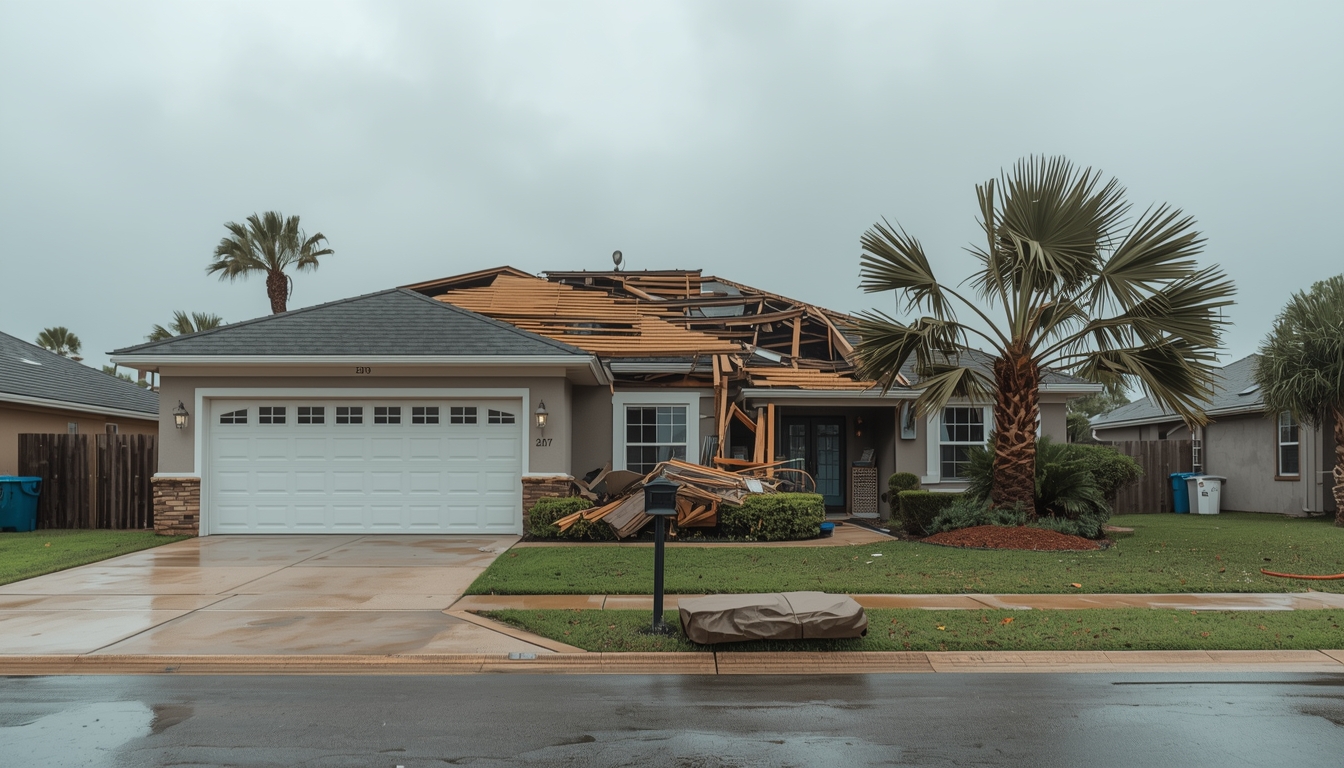
- The Midlands faced a different damage pattern from the coast — less storm surge, more tornadoes, river flooding (Broad/Saluda/Congaree), dense tree canopy losses, and multi-day power outages.
- The central coverage question is wind-driven rain (covered) vs. flood (not covered) vs. wind damage (covered). Insurers commonly misclassify wind-driven rain as flood; evidence of wind damage before water intrusion defeats the misclassification.
- Helene spawned multiple confirmed tornadoes across the Midlands. NWS storm survey reports document tornado tracks; pull yours to support tornado classification of damage.
- Power outage secondary damage — food spoilage, sump pump failure flooding, frozen medications, mold from HVAC outage — is recoverable under separate policy provisions but routinely underclaimed.
- SC's leverage tools apply: § 38-59-20 bad faith, § 38-59-40 90-day rule, § 15-3-530 three-year SOL (running to ~September 2027), § 15-3-140 two-year contractual floor.
What Helene did to the South Carolina Midlands
The Midlands rarely thinks of itself as hurricane country. Columbia, Lexington, and the surrounding counties sit about 130 miles inland from the coast, with the buffer of trees and topography that supposedly weakens tropical systems before they reach central SC. Hurricane Helene didn't follow that script. When the storm crossed the state on September 27, 2024, it retained sustained tropical-storm-force winds well past the Midlands and spawned multiple tornadoes across Richland, Lexington, Kershaw, Newberry, and Fairfield counties. The result was a damage pattern very different from the coast — less storm surge, far more tree and tornado damage, inland river flooding from days of rainfall, and protracted power outages.
For Columbia and Midlands homeowners with unresolved claims 18 months after the storm, the issues are different from the Lowcountry's wind-vs-storm-surge questions. The Midlands battles are wind-driven rain vs. flood, tornado vs. wind, tree damage with inadequate sublimits, and power-outage secondary damage that insurers routinely undervalue.
The Midlands river system and flash flooding
Helene dumped substantial rainfall across the Midlands over multiple days. The runoff produced flooding along three major river corridors:
- The Broad River through Columbia and Newberry County
- The Saluda River from Lake Murray spillway through Columbia
- The Congaree River below the confluence, through Richland and Lexington counties
Properties in flood plains along these corridors saw rising-water flooding that's classified legally as flood, not wind damage. Standard homeowners policies don't cover flood; NFIP or private flood coverage is required. For Midlands river-corridor properties without flood coverage, Helene flood damage may be entirely uninsured.
Beyond the river flooding, flash flooding in low-lying neighborhoods, storm drain backups, and properties with poor drainage created secondary water issues. Distinguishing flash flooding (excluded) from wind-driven rain (covered) and from sewer/drain backup (covered under specific endorsements) is critical to maximizing recovery.
Wind-driven rain: the Midlands' central coverage question
The defining coverage question for Midlands Helene claims is not wind-vs-storm-surge (the Lowcountry's question) but wind-vs-flood-vs-wind-driven-rain. Three categories:
Wind damage (covered)
Direct damage to the building envelope from wind force — shingles, siding, windows, structural elements.
Wind-driven rain (covered when conditions are met)
Water that enters the building through an opening created by wind — a wind-damaged roof or window or vent that admits rain. Coverage typically requires that wind first cause an opening, and that water enter THROUGH that opening (not just past the existing building envelope).
Flood (NOT covered under homeowners)
Water rising from the ground up. River flooding, surface water from heavy rain pooling, runoff from saturated soil.
Insurers commonly attribute Midlands water damage to flood when the actual cause was wind-driven rain through a wind-damaged roof. The classification dramatically changes coverage: covered loss becomes uncovered loss. Evidence supporting wind-driven rain classification:
- Documented wind damage to the roof/windows BEFORE water intrusion
- Water entry pattern from above (ceiling stains, attic moisture) rather than from below (floor saturation, baseboards stained from below up)
- Engineer or contractor opinion identifying the path of water entry
- Timeline showing rain after the wind opening was created
Tornado damage from Helene-spawned tornadoes
Helene produced multiple tornadoes across the Midlands. Tornado damage is covered under standard homeowners policies as a wind peril, but the claim characteristics differ from straight-line wind damage:
- Tornado damage is intensely localized — one home destroyed, the next intact. This creates causation questions when neighbors' damage looks dramatically different.
- Tornado damage often involves projectiles — debris from other properties causing damage to your structure. The projectile damage is generally covered.
- Tornado damage typically produces total or near-total losses on the directly-hit structures.
- NWS damage survey data documenting confirmed tornado tracks is publicly available and supports tornado classification of damage.
For Midlands properties with apparent tornado damage, NWS storm survey reports for your specific area are valuable evidence supporting the tornado classification and the loss being a covered wind peril rather than a different cause.
Tree damage in dense Midlands canopy
The Midlands' urban and suburban tree canopy — dense oaks, pines, and hardwoods across Columbia and surrounding communities — produced thousands of tree-on-structure incidents. Coverage and cost specifics:
- Tree falling on a covered structure: damage to the structure is covered; tree removal coverage is typically capped at low sublimits ($500–$1,500 per tree, $2,500–$5,000 aggregate)
- Tree falling but NOT on a structure (yard tree just down): often partial or no coverage for tree removal
- Large oak removal in Columbia ran $2,000–$8,000 per tree depending on size and access — frequently exceeding sublimits
- Tree damage to vehicles: requires comprehensive auto coverage, not homeowners
- Tree damage to fences, sheds, pools, and other unattached structures: covered under "Other Structures" (Coverage B), typically capped at 10% of dwelling limit
Power outage secondary damage: the underclaimed category
Hundreds of thousands of Midlands residents lost power for days after Helene. Power outages produce several categories of covered secondary damage:
Food spoilage
Most policies have specific food spoilage coverage, often $250–$500 sublimit, or higher with endorsements. Often not claimed because policyholders don't know it exists.
Sump pump failure water damage
Power outage causes sump pump failure causes basement flooding. Coverage depends on specific policy language and endorsements. Many policies have specific sump pump failure endorsements.
Frozen food and refrigerated medications
Beyond consumer food, expensive items like insulin, medical refrigeration, and frozen specialty items add up.
Secondary mold development
Power outage means HVAC offline. SC humidity drives moisture into walls, floors, and contents over days without dehumidification. Mold develops in 24–72 hours. Mold remediation costs can be substantial (typically capped under mold sublimits unless endorsed up).
For Midlands homeowners with multi-day power outages, claiming each category of power-outage secondary damage adds meaningful recovery beyond the headline structural claim.
Additional Living Expense for displaced Midlands families
Many Midlands families were displaced after Helene — either by structural damage, lack of power and water for extended periods, mold concerns, or unsafe conditions. ALE coverage pays the INCREASED costs of living elsewhere while the home is uninhabitable.
ALE limits and mechanics:
- Typically capped at 20% of dwelling limit (Coverage A)
- Time-limited (12–24 months for most policies)
- Covers only the INCREASE in costs, not all costs
- Receipts and tracking matter — ALE doesn't pay against estimates, it pays against documented expenses
Many Midlands homeowners paid displacement costs out of pocket without realizing ALE was available. If you displaced during the Helene recovery, the displacement costs may be recoverable even now.
SC statutory leverage for Midlands Helene claims
- S.C. Code § 38-59-20 — bad-faith handling
- S.C. Code § 38-59-40 — 90-day attorney-fee rule
- S.C. Code § 15-3-530 — three-year SOL (running to approximately September 2027 for Helene losses)
- S.C. Code § 15-3-140 — two-year contractual floor (running to approximately September 2026 at minimum)
- NFIP one-year clock — federal flood claim deadlines run separately
Steps for Midlands homeowners with unresolved Helene claims
- Compile your complete claim file. Every communication, every estimate, every payment.
- Distinguish covered from excluded water damage. Wind-driven rain through wind-damaged openings is covered; flood is not. Get an engineer or contractor to identify the water-entry pathway.
- Claim every category of damage. Structural, tree, contents, food spoilage, sump pump, mold, ALE. Each may have separate sublimits and require separate documentation.
- Verify the deductible was applied correctly. Standard, wind/hail, hurricane — different policies use different language and different triggers.
- Get NWS data if tornado damage is involved. Confirmed tornado tracks support classification of damage as tornado vs. other cause.
- Don't sign final releases without legal review. Some carriers are pushing final-settlement releases that close out reopened claims, supplements, and bad-faith causes of action.
- Consult an attorney. Free consultations, contingency arrangements. Best done before deadlines approach.