- On the night of May 16, 2025, a violent tornado outbreak tore across southern and eastern Kentucky, with a long-track tornado devastating the Somerset and London area in Pulaski and Laurel Counties, causing multiple fatalities and catastrophic property damage in a federally declared disaster (DR-4875).
- Unlike a hurricane, a tornado is overwhelmingly a wind event — and wind is a generally covered peril under a standard homeowners policy — so the central question on most tornado claims is the scope and valuation of covered damage rather than wind-versus-flood causation.
- Contested KY tornado claims commonly turn on total-loss valuation, debris removal and code-upgrade costs, additional living expenses for displaced families, roof and structural scope, and matching where only part of a structure is repaired.
- Kentucky recognizes a bad-faith framework under the Wittmer standard and provides for 12% interest under KRS 304.12-235 when a carrier fails to make a good-faith attempt to settle after a proper proof of loss — which makes a sworn proof of loss an important step.
- At Property People Law, we review KY tornado claims and any denial at no cost. Our KY residential and commercial property work is generally on contingency — we only get paid from the recovery, not your pocket.
On the night of May 16, 2025, a violent tornado outbreak swept across southern and eastern Kentucky. The hardest-hit area was the Somerset–London corridor in Pulaski and Laurel Counties, where a long-track, high-intensity tornado tore through neighborhoods after dark, destroying homes, killing multiple people, and leaving a path of catastrophic damage. The federal government issued a major disaster declaration (DR-4875), opening individual assistance to affected Kentuckians and underscoring the scale of the destruction.
For property owners, a tornado creates a different insurance picture than a hurricane. Where a hurricane raises the wind-versus-flood question because it brings both, a tornado is overwhelmingly a wind event — and wind is a generally covered peril. That doesn't mean tornado claims are simple. The disputes shift from causation to valuation and scope: what a total loss is actually worth, what debris removal and code upgrades cost, how long additional living expenses run, and whether the carrier's roof and structural scope matches reality.
This guide walks through what the May 2025 outbreak did across Kentucky, why a tornado claim is primarily a wind-coverage claim, six considerations for KY property owners with a contested claim, how the Wittmer bad-faith standard and the 12% interest rule may apply, and how we at Property People Law approach contested KY storm claims. Every policy is different, every claim turns on its own facts.
What the May 16, 2025 Tornado Outbreak Did Across Kentucky
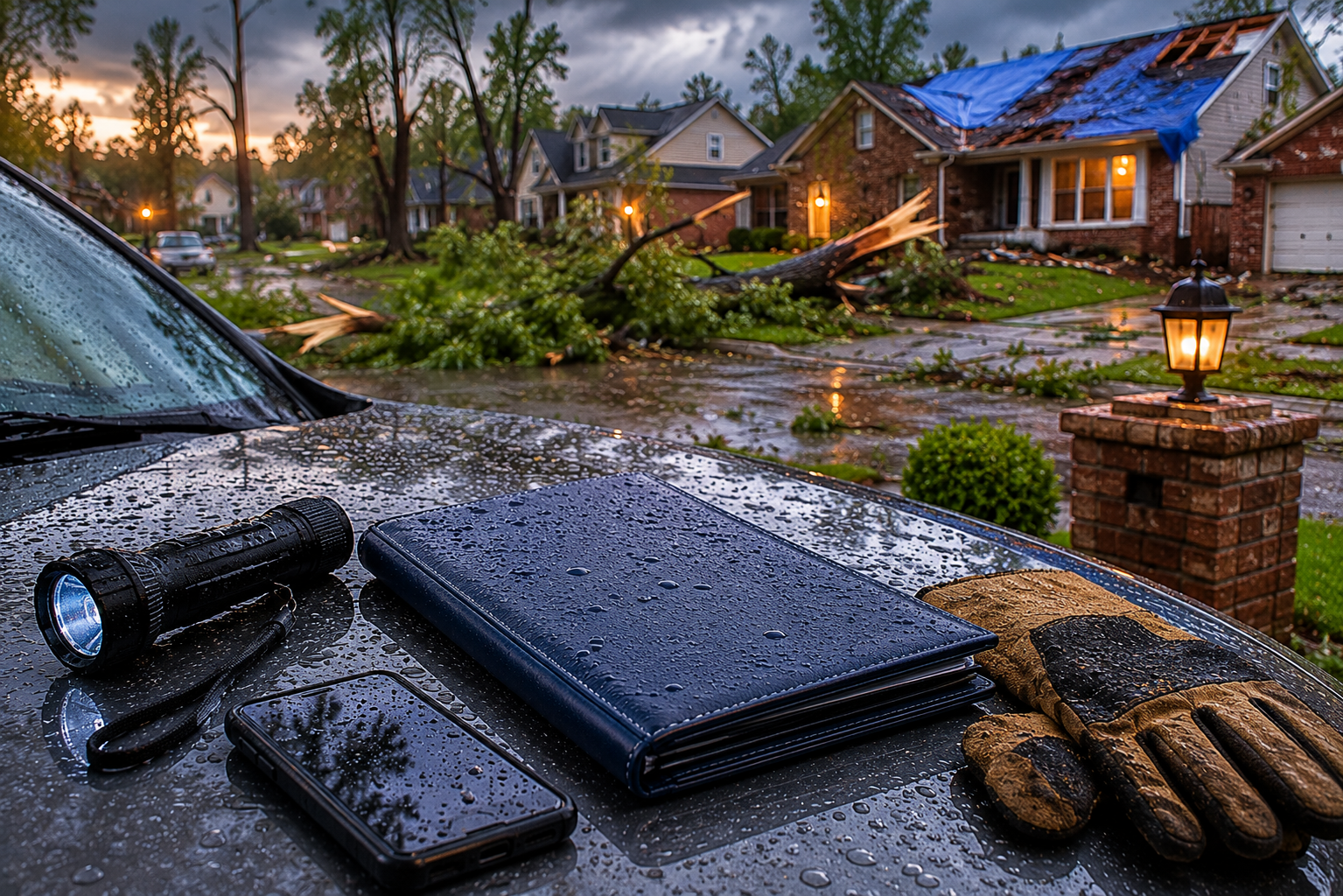
The defining event of the outbreak was the long-track tornado that struck the Somerset and London area in Pulaski and Laurel Counties. Moving through after nightfall, it leveled homes, damaged a wide swath of property, and caused multiple deaths — one of the deadliest tornado events the region had seen in years. Whole neighborhoods were reduced to debris, and the scale of structural destruction was severe enough to draw a prompt federal disaster declaration.
Tornadoes are concentrated, violent wind events. Unlike the broad rainfall and flooding of a tropical system, a tornado's damage is overwhelmingly structural and wind-driven — roofs torn off, walls collapsed, homes shifted off foundations, and debris driven through structures. Some properties in the path were total losses; others at the margins took partial roof and structural damage. Rain that followed the tornado could add water damage where the building envelope had already been breached by wind, but the primary peril was the wind itself.
None of this changes the legal framework that governs a claim. Kentucky insurance law, the Wittmer bad-faith standard, the unfair claims settlement practices framework, and the KRS 304.12-235 interest provision apply to a May 2025 tornado claim the same way they apply to any KY property loss. What the tornado outbreak changes is the nature of the dispute — because a wind-driven total or near-total loss raises valuation and scope questions more than causation questions.
Why a Tornado Claim Is Primarily a Wind-Coverage Claim
A standard homeowners policy in Kentucky generally covers wind damage, and tornado damage is wind damage. That makes the causation question that dominates hurricane claims — wind versus flood — far less central to a tornado claim. In most cases the carrier does not dispute that a tornado is a covered peril. The dispute, when there is one, is about how much the covered loss is worth and what the scope of repair or rebuild properly includes.
That shifts the battleground. On a total loss, the question becomes valuation: whether the carrier's payment reflects the full replacement cost or dwelling limit, how debris removal is handled, and whether code-upgrade (ordinance-or-law) coverage applies to bring a rebuild up to current building codes. On a partial loss, the question becomes scope: whether the carrier's estimate captures all the structural and roof damage, whether matching applies where only part of a roof or elevation is replaced, and whether depreciation was reasonable.
Water damage can still enter the picture. If rain followed the tornado and entered through openings the wind created, that water intrusion is generally covered as part of the wind loss. The narrow exception where flood becomes relevant — a tornado embedded in a larger rain-and-flooding event — is uncommon in the Somerset–London fact pattern, where the tornado itself was the catastrophic event. For most of these claims, the analysis is wind-coverage scope and valuation, not the flood exclusion.
What KY Homeowners Policies Generally Provide After a Tornado
Most KY homeowners policies are written on an HO-3-style form, covering the dwelling and other structures on an open-peril basis subject to exclusions, with personal property typically on a named-peril basis. Wind — including tornado — is a generally covered peril. The coverage areas that matter most on a tornado claim are the dwelling limit and its replacement-cost basis, debris removal, ordinance-or-law (code-upgrade) coverage, additional living expenses, and personal property.
Several terms deserve particular attention on a tornado claim. The roof and dwelling settlement basis — replacement cost versus actual cash value — affects how much the carrier owes before any recoverable depreciation. Ordinance-or-law coverage matters enormously on a rebuild, because current building codes may require more than what existed before. Additional living expense coverage matters for families displaced from destroyed homes, sometimes for many months. And on a total loss, Kentucky's valued-policy considerations and the dwelling limit interact in ways worth reviewing closely.
As with any policy, the notice and mitigation conditions apply — the duty to protect the property from further damage after the tornado, for example by tarping and securing what remains. The specific language in your policy and on your declarations page controls. For a May 2025 event, gathering the policy in effect at the time, the declarations page, and the full claim file is the foundation for understanding what you were owed.
Six Considerations for KY Property Owners with a Contested Tornado Claim
When a KY May 2025 tornado claim is contested, several considerations tend to drive how it resolves. These reflect the valuation-and-scope nature of tornado claims rather than the causation focus of hurricane claims.
- Get the total-loss valuation right. On a destroyed home, confirm the carrier's payment reflects the full replacement cost or the dwelling limit, not a depreciated figure that shortchanges the rebuild. Total-loss valuation is the central dispute on the most severe tornado claims, and an independent rebuild estimate is what tests the carrier's number.
- Account for debris removal and code-upgrade costs. Clearing a destroyed structure and rebuilding to current code can add substantial cost. Confirm debris removal is covered and that ordinance-or-law coverage is applied where codes have changed since the home was built — these are frequently underpaid or overlooked on tornado rebuilds.
- Pursue full additional living expenses. Families displaced by the tornado may be out of their homes for many months during a rebuild. Additional living expense coverage is meant to bridge that period, and carriers sometimes underpay or prematurely cut it off. Document the displacement and the ongoing costs.
- Examine the roof and structural scope on partial losses. For properties at the margins of the tornado's path, roof and structural claims turn on whether the carrier's scope matches an independent assessment and whether depreciation was reasonable. On an actual-cash-value settlement, recoverable depreciation may be available once repairs are completed and documented.
- Raise matching where only part of a structure is repaired. Where a tornado damaged part of a roof or one elevation, Kentucky's matching guidance (806 KAR 12:095) requires repairs to be reasonably uniform with existing materials, which may support a fuller scope when a partial repair would leave a visible mismatch. Our Kentucky matching guide covers how to raise it.
- Submit a sworn proof of loss to start the interest clock. Kentucky's KRS 304.12-235 provides that the settlement value bears 12% interest beginning 30 days after the carrier receives a formal proof of loss, when the carrier fails to make a good-faith attempt to settle. Submitting a written, sworn proof of loss is what starts that clock — an important and often-overlooked step on a contested KY claim.
How Kentucky's Wittmer Standard and 12% Interest Rule May Apply
Most contested tornado claims are ordinary valuation or scope disputes — the carrier reached one figure for the loss or the rebuild, the policyholder disagrees, and the evidence and the policy language decide which position holds. That's the normal terrain of a catastrophic-loss claim and doesn't by itself implicate any bad-faith framework. A genuine disagreement over total-loss value or repair scope, handled in good faith, gets resolved on the facts and the estimates.
Kentucky's bad-faith framework comes from Wittmer v. Jones, which sets three elements: the carrier was obligated to pay the claim under the policy; the carrier lacked a reasonable basis in law or fact for denying or delaying the claim; and the carrier either knew there was no reasonable basis or acted with reckless disregard for whether one existed. Alongside that, KRS 304.12-235 provides that the settlement value bears interest at 12% per year beginning 30 days after the carrier receives a formal proof of loss, when the carrier fails to make a good-faith attempt to settle — which is why submitting a sworn proof of loss matters.
Whether that framework applies to a specific May 2025 tornado claim depends on the carrier's actual conduct. Refusing to pay a clearly covered total loss without a reasonable basis, ignoring an independent rebuild estimate, or unreasonably cutting off additional living expenses for a displaced family are the kinds of conduct that can move a claim from ordinary dispute toward the Wittmer analysis. A debatable valuation handled in good faith generally won't. See our Kentucky bad-faith pillar for the full framework.
How Property People Law Approaches Contested KY Storm Claims
When a KY property owner reaches out about a denied or underpaid May 2025 tornado claim, the first conversation is free and the framework is consistent. We read the policy and the declarations page in effect at the time of the storm — the dwelling limit and its replacement-cost basis, debris removal, ordinance-or-law coverage, additional living expenses, personal property, and the notice and mitigation conditions. We pull the claim file and any estimate the carrier's position relied on.
From there we compare the carrier's position against an independent rebuild or repair estimate. We identify whether the total-loss valuation is full and correct, whether debris removal and code-upgrade costs are properly covered, whether additional living expenses are being fully paid, where roof and structural scope falls short on partial losses, whether matching applies, and whether a sworn proof of loss has been submitted to start the 12% interest clock under KRS 304.12-235. Where the carrier's conduct supports it, we evaluate the Wittmer bad-faith analysis. We work alongside KY property owners across every step of those disputes.
Our KY residential and commercial property work is generally on contingency — we only get paid from the recovery, not your pocket. Past results in other cases don't guarantee outcomes in any new matter, and every claim turns on its own facts.