- Liberty Mutual is a large national homeowners insurer that sells both directly and through agents, with an optional-endorsement structure — so what a specific Liberty Mutual policy covers depends heavily on which endorsements were added.
- North Carolina's exposures span coastal wind and hurricane risk, Piedmont hail and wind, and the mountain flooding that Hurricane Helene brought in 2024 — each raising different coverage questions on a Liberty Mutual policy.
- Contested NC Liberty Mutual claims commonly turn on wind-versus-flood causation, roof scope and depreciation, hail characterization, and matching on partial repairs.
- When a NC carrier handles a claim unfairly, N.C. Gen. Stat. § 75-1.1 may allow treble damages and attorney's fees, and § 58-63-15 sets the unfair-claim-settlement standards — both apply regardless of the carrier's size or brand.
- At Property People Law, we review NC Liberty Mutual claims and any denial at no cost. Our NC residential and commercial property damage work is generally on contingency — we only get paid from the recovery, not your pocket.
Liberty Mutual is one of the largest property insurers in the country, a national carrier that sells homeowners coverage both directly to consumers and through agents. For many North Carolina homeowners, a Liberty Mutual policy is a familiar, mainstream choice, and the scale of a large national carrier brings broad availability and a developed claims operation — along with, like any carrier, the prospect of a contested claim when a loss occurs.
A familiar brand doesn't change a basic reality: not every claim is paid the way the policyholder believes it should be. Large carriers process high volumes of claims, apply exclusions, scope repairs, and depreciate — and on a NC coastal, Piedmont, or mountain loss, the policyholder may find the offer falls short of what the policy should provide. When that happens, the policyholder has the same rights and the same legal framework available as with any carrier. A recognizable brand doesn't make a particular denial or underpayment correct.
This article walks through how Liberty Mutual's national model and optional-endorsement structure work, what NC Liberty Mutual policies generally provide, six considerations for NC policyholders with contested claims, how the § 75-1.1 framework may apply, and how we at Property People Law approach contested NC Liberty Mutual claims. Every policy is different, every claim turns on its own facts.
How Liberty Mutual's National Model and Optional-Endorsement Structure Work
Liberty Mutual sells homeowners insurance through multiple channels — directly online and by phone, and through agents — and handles claims through its own claims operation. For a policyholder, the company on the declarations page is Liberty Mutual (or a Liberty Mutual subsidiary), and a contested claim is adjusted and decided through the carrier's claims process regardless of how the policy was purchased.
Liberty Mutual's coverage is often structured with a base policy plus a range of optional endorsements that expand protection in specific areas. The practical effect is that two Liberty Mutual policies can differ meaningfully depending on which endorsements each policyholder added. What a specific policy covers — and what it excludes or limits — depends on the base form and the endorsements, which makes reading the declarations page and endorsement schedule important before and during a claim.
None of this changes the governing law. North Carolina insurance law, the claim-handling regulations under § 58-63-15, and the § 75-1.1 framework apply to a Liberty Mutual policy exactly as they apply to any NC property insurer. The national model and endorsement structure shape how the policy was sold and what it includes — not the legal standards that govern a claim.
What NC Liberty Mutual Policies Generally Provide on Residential Property
NC Liberty Mutual homeowners products are generally written on an HO-3-style form, with the dwelling and other structures on an open-peril basis subject to exclusions, and personal property on a named-peril basis unless broader contents coverage was added by endorsement. Optional endorsements may expand coverage for specific risks and items, so the policyholder's selected endorsements shape the overall protection.
North Carolina's geography means different exposures. On the coast, wind and hurricane exposure dominates, often with a percentage wind or hurricane deductible that can produce a large out-of-pocket figure on a major-storm claim. In the Piedmont, hail and wind-driven storm damage is the more common risk. And in the western mountains, the catastrophic flooding from Hurricane Helene in 2024 underscored that flood is generally excluded and requires separate coverage — making wind-versus-flood causation a central question. Our NC wind-vs-flood causation guide covers that analysis.
As with any policy, resulting mold damage generally carries a sublimit, roof coverage may be written on a replacement-cost or actual-cash-value basis depending on the roof's age and the policy terms, and the notice and mitigation conditions apply. The specific language in your policy and on your declarations page, including the endorsement schedule, controls — reading it before storm season is the cheapest claim-protection step a NC property owner can take.
Six Considerations for NC Liberty Mutual Policyholders with Contested Claims
When a NC Liberty Mutual claim is contested, several considerations tend to drive how it resolves. None is unique to Liberty Mutual — they're the same dispute categories that follow most NC property losses — but they recur on these claims.
- Confirm the named insurer and the endorsement schedule. Identify the exact Liberty Mutual entity on the declarations page and review which endorsements were added, because coverage depends on the base form plus the endorsements. A loss covered with a particular endorsement may be denied without it, so the endorsement schedule is an essential early check.
- Pin down wind-versus-flood causation. After a hurricane or tropical system — a real exposure across coastal and even central and western NC, as Helene showed — identify what damage came from wind or wind-driven rain (generally covered) versus rising water or flooding (generally excluded), and document the sequence. A denial that labels the whole loss 'flood' without engaging that sequence is a common dispute.
- Examine the roof scope and depreciation. Roof claims frequently turn on whether the carrier's scope matches an independent roofer's assessment and whether depreciation was reasonable. On an actual-cash-value roof settlement, recoverable depreciation may be available once repairs are completed and documented. Compare the carrier's scope against an independent estimate before accepting it.
- Scrutinize hail characterization. NC's Piedmont sees frequent hail, and a common dispute is whether hail damage is functional or merely cosmetic. If the hail compromised the roof's integrity or service life rather than just its appearance, characterizing it as cosmetic may not hold up. An independent roofer's functional-damage assessment is what supports the challenge.
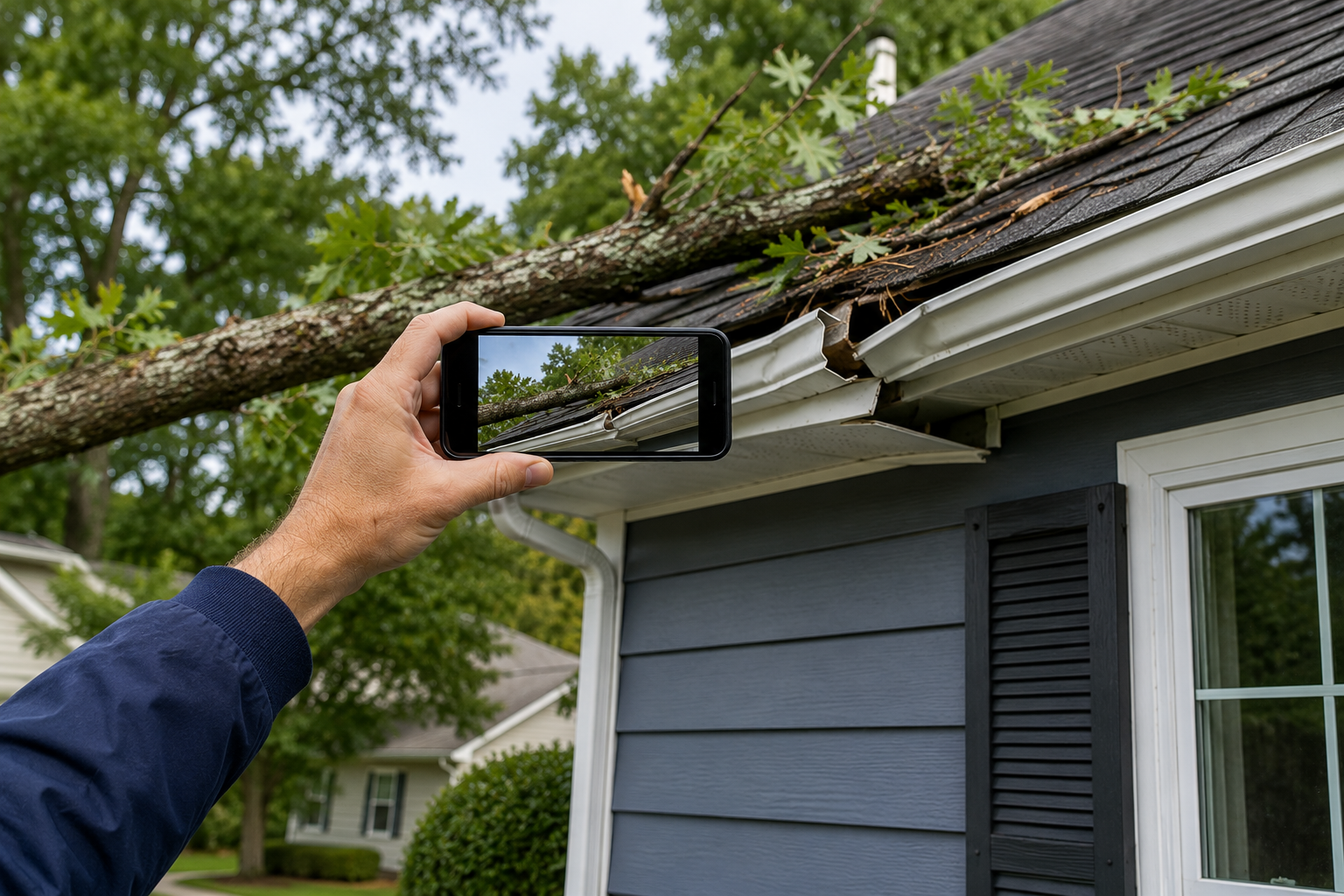
- Raise matching where only part of a structure is repaired. When a storm damages part of a roof or one elevation, the matching question arises. While North Carolina has no specific matching statute, most policies' like-kind-and-quality language may support expanded scope when partial repair would leave a visibly mismatched result. Our NC matching guide covers how to argue it under the policy.
- Document the loss and gather the right records. Date-stamped photos before mitigation, an independent contractor's scope, prompt written notice, and mitigation receipts all support the claim. A reopened or supplemented claim is often built on documentation that shows the carrier's original scope or causation call didn't match the actual damage.
How North Carolina's § 75-1.1 Framework May Apply
Most contested NC Liberty Mutual claims are ordinary coverage or scope disputes — the carrier reached one conclusion, the policyholder disagrees, and the evidence decides which position holds. That's the normal terrain of a property claim and doesn't by itself implicate any statutory penalty framework, regardless of the carrier's size or brand.
North Carolina's framework for insurer misconduct runs through two statutes. N.C. Gen. Stat. § 58-63-15 defines unfair claim settlement practices — the claim-handling conduct insurers are required to avoid. And N.C. Gen. Stat. § 75-1.1, the Unfair and Deceptive Trade Practices Act, may provide a remedy of treble damages and attorney's fees when an insurer's conduct is found to be an unfair or deceptive practice. A November 2024 bulletin from the North Carolina Insurance Commissioner addressed claim-handling expectations following that year's storms; we reference it as neutral context for the standards carriers are expected to meet, not as a comment on any particular claim.
Whether that framework applies to a specific Liberty Mutual claim depends on the carrier's actual conduct — not its size or brand. Mischaracterizing covered wind damage as excluded flood without investigation, refusing to engage a documented independent estimate, or ignoring evidence are the kinds of conduct that can move a claim from ordinary dispute toward the statutory framework. A debatable position taken in good faith generally won't; unfair handling of a covered loss may. See our NC bad-faith pillar for the full framework.
How Property People Law Approaches Contested NC Liberty Mutual Claims
When a NC Liberty Mutual policyholder reaches out about a denied or underpaid claim, the first conversation is free and the framework is consistent. We read the policy and declarations page carefully — the named insurer, the endorsement schedule, the wind coverage, the flood exclusion, the anti-concurrent-causation clause, the roof-settlement basis, the mold sublimit, and the notice and mitigation conditions. We pull the claim file and any engineering or adjuster report the carrier's position relied on.
From there we compare the carrier's position against the physical evidence, an independent contractor's scope, and the documented storm sequence at the property. We identify where the covered wind-versus-flood characterization is supportable, where the carrier's estimate falls short, where matching and recoverable depreciation add to the claim, where a high-volume adjustment may have missed scope, and whether the carrier's conduct may support a § 75-1.1 argument alongside the § 58-63-15 standards. We work alongside NC property owners across every step of those disputes.
Our NC residential and commercial property work is generally on contingency — we only get paid from the recovery, not your pocket. Past results in other cases don't guarantee outcomes in any new matter, and every claim turns on its own facts.