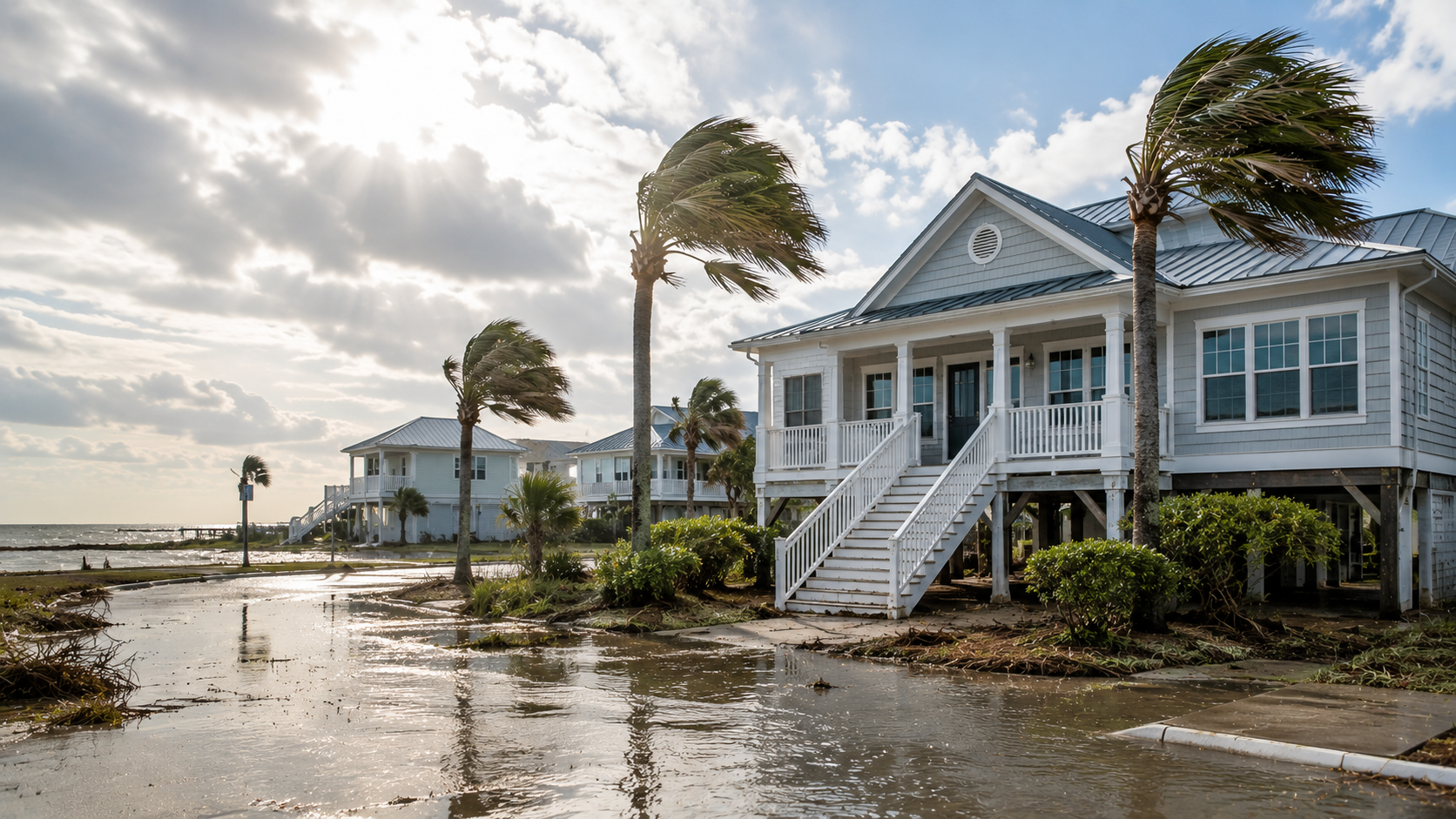
- Most NC homeowners policies generally exclude flood while covering wind, hail, and wind-driven rain through wind-created openings. When Helene brought both, the sequence and source of damage often decided what was covered.
- Helene wind reached Western NC overnight on September 26-27, 2024. Inland river-rise generally came hours to a day later. That gap created a window where wind damage may have occurred independently of any flooding — which matters for coverage.
- NC's anti-concurrent-causation clauses have real limits. They generally apply only when the excluded peril actually contributed to the specific damage at issue — not where pure wind damage happened in isolation before water arrived.
- Conduct around aggressive flood-exclusion denials may support a § 75-1.1 unfair-trade-practices argument under NC law. The November 2024 NC Insurance Commissioner bulletin warning carriers about exactly this pattern adds to the regulatory backdrop.
- At Property People Law, we read NC policies and develop the causation record at no cost. Our NC residential and commercial property damage work is generally on contingency — we only get paid from the recovery, not your pocket.
Eighteen months after Hurricane Helene, the wind-versus-flood causation question is still driving the largest cluster of contested NC property claims. The fact pattern recurs across Buncombe, Yancey, Avery, Mitchell, McDowell, Madison, and the surrounding Western NC counties: a home took wind damage during the overnight hours of September 26-27, 2024, then took flood damage when rivers crested hours to a day later. The carrier denied the entire claim under the flood exclusion. The property owner is now sitting on a denied claim with a contractual suit-limitation deadline approaching.
This article walks through how the wind-versus-flood analysis works in NC, how the anti-concurrent-causation clauses are typically interpreted, a seven-step framework for building the wind-first evidentiary record, how NC's § 75-1.1 framework may apply when carrier conduct is aggressive, what deadlines control, and how we at Property People Law approach NC causation cases. Every policy is different, every claim turns on its own facts.
The honest framing: not every Helene denial gets overturned. Some properties took primarily flood damage and the carrier had a reasonable basis for the denial it issued. But many denials swept up wind damage that should have been covered, and the legal framework supports separating the two.
How NC's anti-concurrent-causation clauses interact with the wind-first analysis
Most NC homeowners policies contain an anti-concurrent-causation clause that generally says: when an excluded peril contributes to a loss — in any sequence — the entire loss may be excluded regardless of any other cause. Flood is one of the excluded perils. Carriers use the clause to argue that if any flooding contributed to any part of the loss, the whole claim falls outside coverage.
The legal limit on the argument matters more than the argument itself. The clause generally applies only when the excluded peril actually contributed to the specific damage at issue. Pure wind damage that occurred before any flooding may not be subject to the clause because flood didn't contribute to that particular damage. Damage to upper stories above the flood line generally wasn't caused by flooding, no matter how much flooding occurred elsewhere on the property. Damage from wind-driven rain entering through openings the wind created may be characterized as covered wind damage even when separate flooding caused other damage.
NC's anti-concurrent-causation analysis has been refined by case law and regulatory guidance. The November 2024 NC Insurance Commissioner bulletin warned carriers against aggressive flood-exclusion denials, signaling regulatory attention to exactly this pattern. We cover the ACC clause in depth in our NC anti-concurrent-causation deep-dive.
Seven steps for building the wind-first evidentiary record
The legal framework supports the wind-first analysis on the right facts. Whether the framework helps a specific property owner depends on the evidence. Seven specific steps build the record that holds up against a flood-exclusion denial.
- Pull the carrier's claim file. NC property owners are generally entitled to request the carrier's claim file — adjuster notes, engineer's reports, photos the carrier took, and the documented basis for any denial. This is often the starting point. The carrier's own documentation sometimes supports the wind-first argument the carrier denied.
- Obtain the NWS public information statement for your county. The NWS forecast offices in Greenville-Spartanburg, Morristown, and Raleigh published post-event public information statements after Helene with peak gust data by county and hourly timing. Pull the one for your county. These statements are publicly available and may establish that hurricane-force winds reached the property hours before any flooding crest.
- Document the river-rise timing. USGS gauges on every major NC river provide hour-by-hour stage records. The French Broad, Swannanoa, Pigeon, Catawba, Yadkin — each has gauge data that establishes when the flood crest reached a given location. The gap between peak wind timing and crest timing is the wind-first window.
- Collect every photograph from the 72 hours after the storm. Your own phone photos. iCloud and Google Photos backups. Text messages with photos sent to family or friends. Neighbor photos. Local news imagery. Date-stamped photos with embedded location metadata may establish what damage existed when. The wider the net, the more pieces of evidence available.
- Get contractor and tree-service reports from the immediate aftermath. Roofers who tarped properties, tree services that removed fallen trees, water-mitigation crews who responded — anyone who came out in the days after Helene generally has records that document the damage state at that point. Those records may help establish what was wind damage before further changes occurred.
- Identify damage above the flood line. Roof damage, gable failures, siding loss, upper-story window breaks — damage that physically wasn't reached by floodwater generally wasn't caused by flooding regardless of what happened below. Establishing the maximum flood line on the property (from waterlines on walls, USGS data, or neighbor accounts) separates wind damage from flood damage cleanly.
- Develop the wind-driven rain chain. Interior water damage that came through openings the wind created — missing shingles, blown-off siding, debris-broken windows — generally remains covered as wind-driven rain through wind-created openings. The chain runs: wind → opening → rain entry → interior damage. Documenting each link helps preserve coverage for interior damage even when separate flooding occurred elsewhere on the property.
How the NC § 75-1.1 unfair-trade-practices framework may apply
Beyond the contract analysis, NC has the § 75-1.1 framework that may apply treble damages and attorney's fees when an insurer handles a claim unfairly. Aggressive flood-exclusion denials — applied to wind damage with little or no investigation, applied without distinguishing damage above the flood line from damage below it, applied while refusing to share the engineer's report the denial relied on — may fit the unfair-trade-practices analysis when the conduct supports it.
The November 2024 NC Insurance Commissioner bulletin warned carriers against penalizing policyholders who pursued NFIP denial letters as part of coverage disputes. The bulletin itself isn't a statute, but it established a regulatory expectation. Carriers whose post-bulletin conduct continued patterns the bulletin specifically called out may face a stronger inference of unfair handling under § 75-1.1.
Whether the § 75-1.1 framework applies to a specific case depends on the carrier's actual conduct and the documentation. Some Helene denials look like contract disputes where the carrier had a reasonable basis. Others look like unfair-trade-practices cases when the file is examined closely. The first review tells you which one you're holding.
Deadlines that limit how long the causation argument stays live
Three categories of deadline shape every NC Helene causation case. The contractual suit-limitation clause in the policy itself controls the underlying breach-of-contract claim. Most NC homeowners policies set this at two years from the date of loss. For Helene claims dated September 26-27, 2024, that window may close between roughly September 2026 and September 2027 depending on the specific policy language.
The common-law bad-faith tort claim runs on NC's three-year general tort statute of limitations, with the trigger date generally being when the property owner discovered or should have discovered the bad-faith conduct. The § 75-1.1 unfair-trade-practices claim runs on a four-year statute of limitations — the longest of the three. UDTP remedies may remain available even after the underlying contract claim has time-barred, though the practical value drops substantially without an underlying covered claim to anchor damages.
The contractual deadline is generally the operative clock. If a denied Helene claim is approaching its two-year anniversary, the cautious move is to get the policy and the denial letter in front of an attorney this month rather than next. Causation arguments don't get stronger with age, and the evidence that supports them tends to get harder to assemble after a year or two.
How Property People Law approaches NC causation cases
When a NC property owner reaches out about a denied or contested Helene claim, the first conversation is free and the framework is consistent. We read the policy carefully — flood exclusion language, anti-concurrent-causation clause, wind-driven rain coverage, every relevant endorsement. The exclusion language varies meaningfully across NC carriers.
From there we develop the meteorological and physical record specific to the property and the storm event. We pull NOAA, NWS, and USGS data. We supplement the property owner's documentation with publicly available imagery and reports. We compare the carrier's denial reasoning against the evidence and identify where the wind-first analysis applies, where the wind-driven rain analysis applies, and where damage above the flood line stands on its own. And we tell you whether what you're holding is a contract case, a § 75-1.1 case, a common-law bad-faith case, or some combination.
Our NC residential and commercial property damage work is generally on contingency — we only get paid from the recovery, not your pocket. Past results in other cases don't guarantee outcomes in any new matter, and every claim turns on its own facts.