- The gap between a Virginia contractor's bid and the first check can hold more than depreciation: code upgrades, overhead and profit, tax and permits, and sometimes a functional replacement cost limit. Each is claimed differently.
- A policy written for functional replacement cost — repair with cheaper materials that do the same job — is one Virginia requires to be delivered with a boldface "Important Notice" when it is new. Read that notice beside the loss settlement section and the estimate's material lines.
- Work the building code requires beyond a like-kind repair generally falls under ordinance or law coverage, a separate and smaller limit paid as the cost is incurred, and it is claimed with the contractor's code records rather than as recoverable depreciation.
- Overhead and profit, sales tax, and permit fees vary from one estimate to the next — paid up front, held back with the lines they sit on, or left off — and each is raised as its own written question.
- Send us the estimate, the declarations page, and your contractor's bid, and a free review can sort which piece of the gap is which. Our VA residential and commercial property work is generally on contingency — we only get paid from the recovery, not your pocket.
Arguing depreciation on an older Virginia house can leave part of the gap unclaimed, because code work, overhead and profit, and a functional replacement cost limit don't come back the way depreciation does. Some of the difference between the contractor's bid and the insurer's estimate is the cost of bringing the repair up to today's building code. Some is overhead and profit the estimate left off or held back. And on some policies, some of it is a functional replacement cost limit that pays for cheaper materials doing the same job as the house's originals. Each of those is claimed on its own terms, with its own paperwork.
If you're in an Alexandria rowhouse with plaster walls, a Richmond house with a slate roof, or a Fairfax colonial whose wiring predates the current code, the first check on your claim may have been calculated correctly on terms you never focused on. Before the depreciation is argued, the gap needs sorting.
This article walks through functional replacement cost, code upgrades, the other costs that aren't depreciation, six things to sort before arguing, and where Virginia's fee statute fits when the balance is refused. We are Property People Law, and we represent Virginia policyholders only, never insurers. Every policy is different, every claim turns on its own facts.
Functional Replacement Cost: When Like Kind Isn't the Promise
Standard replacement cost promises repair with materials of like kind and quality. Functional replacement cost promises less: repair with materials that serve the same function at lower cost, such as drywall instead of plaster, a modern architectural shingle instead of slate, or stock millwork instead of custom. Virginia law lets insurers offer it as an option, and it is often written on older homes. Whether your policy is one of them shapes how the estimate's material lines read.
The boldface notice is the first place to look. Virginia requires a new policy written on a functional replacement cost basis to be delivered with a statement in boldface type, headed "Important Notice", saying the coverage applies on that basis and that claims may in some cases settle for less than actual cash value. It travels with the policy papers, so the packet from when the policy was first issued is worth pulling. Read it next to the loss settlement section, which says what the carrier pays to repair with, and then next to the estimate's material lines. Drywall priced against plaster walls, or architectural shingle against slate, is pricing to a functional standard; whether the policy allows it is the question.
Virginia law also allows these policies to give the owner the option of a settlement based on the property's market value at the time of loss; the same loss settlement section shows whether yours does. Under the functional basis itself, a slate roof or a plaster ceiling is generally restored as something that does the same job, and the payment follows that cheaper repair. A restoration contract priced for slate or plaster deserves a hard look against the loss settlement wording before it is signed.
Code Upgrades Are Not Depreciation
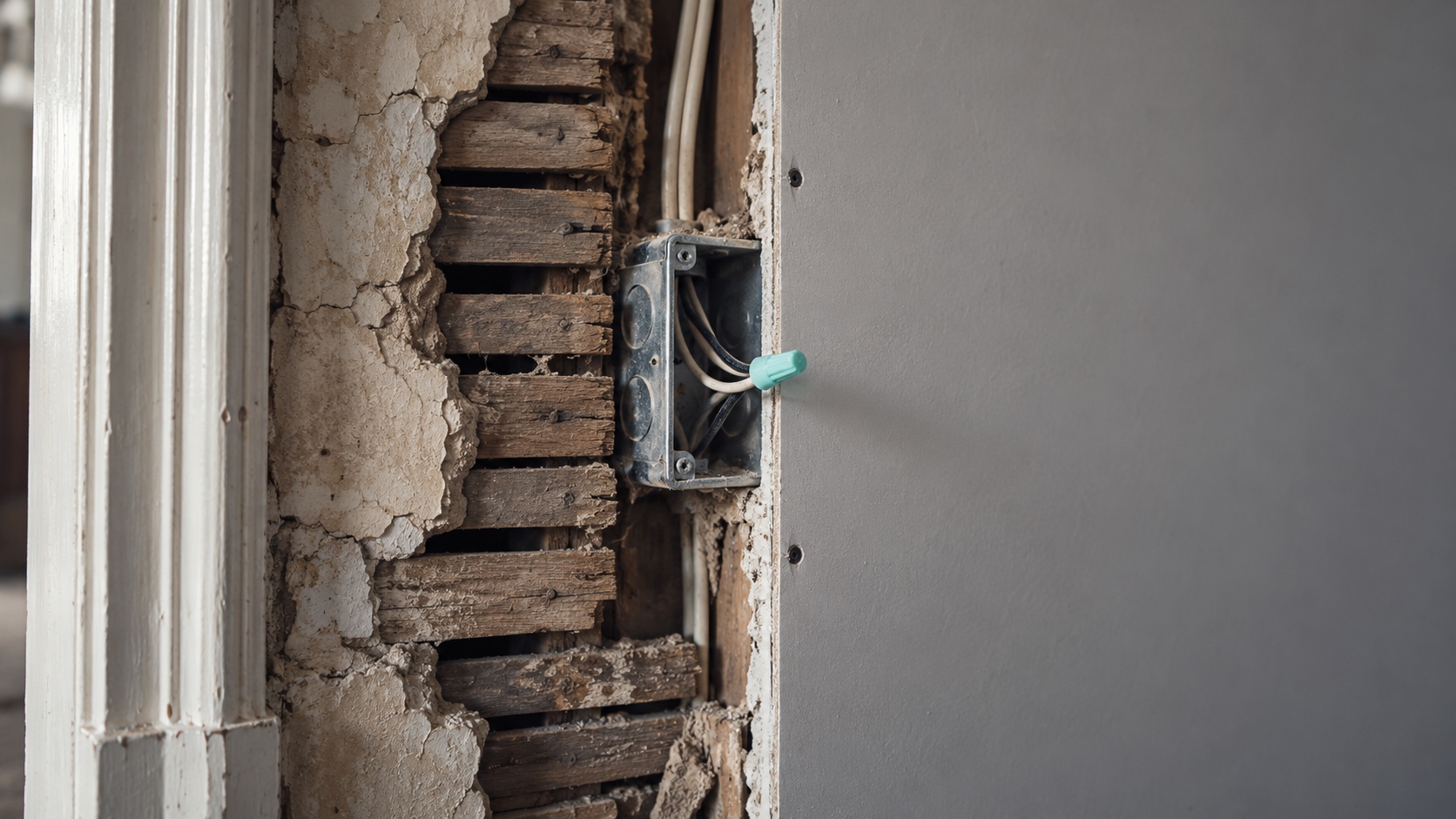
When an older Virginia house is repaired, the building official may require work the original house never had: wiring brought up to current code, smoke and carbon monoxide detection, insulation, stair and railing changes, or a roof deck redone to a current standard. Replacement cost generally does not include those increased costs. They are paid, if at all, under ordinance or law coverage, which on a common homeowners form is up to 10 percent of the dwelling limit and can also reach the cost of tearing out and replacing undamaged parts when the code requires it.
That coverage generally pays when the work is done and the cost is incurred, and it is requested separately from the holdback. The records that carry it are ones a contractor and the building department produce in the ordinary course of the job: the permit application describing the scope, the building official's inspection report or correction notice, a contractor's estimate that prices each code item on its own line apart from the like-kind repair, photographs of the opened walls showing the old wiring before it comes out, and the electrician's invoice once the work passes inspection. Keep each one as it arrives. Together they let the code items be claimed as their own line, under their own limit, instead of disappearing into an argument about depreciation.
Overhead and Profit, Tax, and Permits: The Rest of the Gap
When a repair needs several trades — roofer, framer, electrician, drywall, painter — a general contractor usually coordinates them and charges overhead and profit on top, expressed as a percentage of the repair cost. Estimates generally include it when the job reasonably requires a general contractor; some leave it off on simpler jobs; some pay it only once a general contractor is hired. Where several trades are involved and your estimate has no overhead and profit line, that gap is raised as its own written question, with the contractor's explanation of why the job needs a general contractor attached, rather than inside a depreciation dispute.
Sales tax on materials sits on its own line in most estimate summaries, and some estimates depreciate it along with the materials it is charged on, so part of the tax can be sitting in the holdback. Permit fees may be on the estimate or left until the permit is pulled; the permit invoice from the local building department, or the contractor's permit line with the receipt behind it, is what puts that cost in front of the adjuster. Find the tax line and the permit line on your estimate before treating any of the gap as depreciation.
Six Things to Sort Before Arguing About Depreciation in Virginia
On a Virginia claim, sorting the gap first usually shows which part is worth pressing and how.
- Find the valuation basis. Replacement cost, functional replacement cost, or actual cash value, and any actual cash value roof endorsement. The basis decides what the repair is priced with and whether any depreciation can come back.
- Pull out the code items. List what the building official or the contractor says the code requires beyond a like-kind repair, and find the ordinance or law limit in the policy's additional coverages, or on the declarations page if an endorsement raised it. Those items are requested under that coverage, separately.
- Ask how overhead and profit was handled. If several trades are involved, ask the adjuster in writing whether overhead and profit is included, whether any of it was depreciated or held back, and, if it was left off, why.
- Separate tax and permits. Note which the estimate included and which it will pay only when incurred, so they aren't mistaken for depreciation or lost at the end.
- Check the scope against the bid. Missing items — decking, flashing, interior finishes, a detached garage — can be added through a supplement request backed by the contractor's photographs. Recoverable depreciation generally attaches to the lines the estimate contains, so a missing line has none to release.
- The claim for the balance. The policy and Virginia law set the period for claiming the replacement cost difference, and it runs from the last actual cash value payment or a later court order, not from the end of the work. Owners commonly put the claim for the difference in writing early, with the schedule for the work.
Virginia's Fee Statute and a Refused Replacement Cost Balance
A carrier that applies a functional replacement cost endorsement the owner was given notice of, pays code items under the ordinance or law limit, or asks for invoices before releasing the balance is generally handling the claim as the policy reads. The questions Virginia law can raise generally begin where a carrier refuses a documented claim for the balance or applies a valuation the policy doesn't contain.
Virginia has a statute that can allow a court, in a suit on the policy, to award costs and attorney's fees against an insurer in limited circumstances. Whether it reaches a particular refusal depends on the facts, and the file that answers it is the one the sorting builds: what was claimed, under which coverage, on what date, and with which invoices behind it.
When the disagreement is only about amount — the depreciation, the cost of the functional repair, the code items — the appraisal clause in most Virginia property policies is often the more direct path. Which route fits turns on the policy, the payment history, and whether the dispute is over price or over coverage.
How Property People Law Approaches Virginia Replacement Cost Claims
We sort the gap before we argue it. That means reading the loss settlement section for replacement cost, functional replacement cost, or actual cash value, looking for the boldface notice in the original policy papers, finding the ordinance or law limit, and putting the carrier's estimate next to your contractor's bid line by line — depreciation, code items, overhead and profit, tax and permits, and missing scope. Then we list every payment letter with its date.
When the sorted record shows the carrier owes more, we claim each piece under the coverage that pays it, in writing, with the contractor's permit, inspection and invoice records behind it, and, if the carrier won't move, weigh appraisal or suit with the owner. Our Fairfax office handles these claims for Virginia homeowners and businesses.
Our VA residential and commercial property work is generally on contingency — we only get paid from the recovery, not your pocket. Past results in other cases don't guarantee outcomes in any new matter, and every claim turns on its own facts.