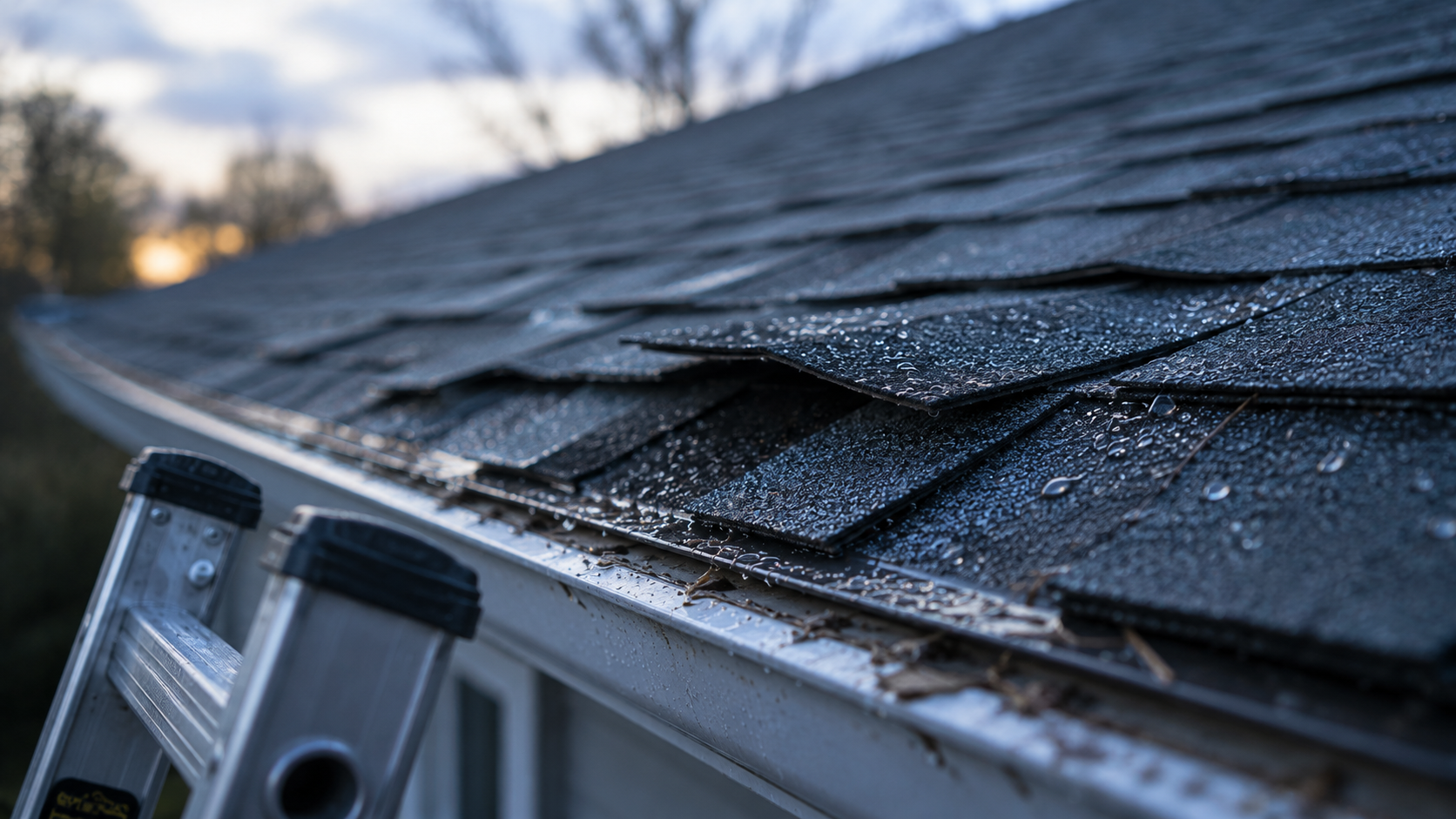
- Most NC homeowners policies cover interior water damage when rain enters through openings the wind created — broken windows, missing shingles, damaged siding. The chain is wind → opening → rain → interior damage. Each link generally has to be documented.
- Helene exposed the wind-driven rain coverage chain at scale across Western NC. Many WNC property owners had roofs damaged by overnight winds and then took interior water damage from rain that entered through those wind-created openings — before any river-rise flooding arrived.
- Six steps build the wind-first proof: pull the NWS public information statement for the storm event, document the exterior wind damage with photos, document the interior water damage with photos showing entry points, establish the storm timeline including any later flood events, identify damage above any flood line, and develop the chain of causation in writing.
- The anti-concurrent-causation clause in NC policies has real limits — the clause generally doesn't override the wind-driven rain coverage when the chain is documented and the interior damage came through wind-created openings rather than from flooding.
- At Property People Law, we review NC wind-driven rain claims at no cost. Our NC residential and commercial property damage work is generally on contingency — we only get paid from the recovery, not your pocket.
Wind-driven rain coverage on most North Carolina homeowners policies covers interior water damage when rain enters through openings the wind itself created. The basic principle is straightforward: when wind breaks a window, tears off shingles, or damages siding, and rain then enters through that opening, the resulting interior water damage is generally covered under the homeowners policy as wind-related damage. The chain runs wind → opening → rain entry → interior damage.
Helene exposed this coverage at scale across Western North Carolina. Property owners in Buncombe, Yancey, Mitchell, Avery, McDowell, Madison, and surrounding counties had roofs damaged by overnight hurricane-force winds on September 26-27, 2024. Many of those same properties then took interior water damage from rain entering through wind-created openings — hours before any river-rise flooding occurred. The interior damage was generally covered as wind-driven rain through wind-created openings under the standard homeowners policy, regardless of whether separate flood damage arrived later and regardless of whether the property owner had NFIP coverage.
This article walks through six numbered steps for proving the wind-first chain on a NC wind-driven rain claim, how the coverage interacts with NC's anti-concurrent-causation analysis, when the § 75-1.1 framework may apply when carriers refuse to recognize the covered chain, and how we at Property People Law approach NC wind-driven rain disputes. Every policy is different, every claim turns on its own facts.
Six steps for proving the wind-first chain
Six specific steps build the wind-first proof on most NC wind-driven rain claims. The combination matters more than any individual step — the chain has to hold together end to end.
- Pull the NWS public information statement for the storm event. The National Weather Service issues post-event public information statements that document wind speeds, timing, and damage patterns by county. For Helene, the NWS forecast offices in Greenville-Spartanburg, Morristown, and Raleigh published detailed statements after the storm. For any major NC storm event, the NWS statement establishes the meteorological facts independent of the property owner's account. Pull the statement for your county and storm event. It's the starting point for any wind-first argument.
- Document the exterior wind damage with photos. Photos taken as soon as it's safe after the storm establish the wind-created openings. Broken windows, missing shingles, damaged siding, tree falls on the roof, debris impact damage — each is a candidate opening. The photos should be date-stamped (most modern smartphone cameras automatically embed date and location metadata) and should show the openings clearly with their relationship to the rest of the building. The wider the photo coverage, the stronger the documentation.
- Document the interior water damage with photos showing entry points. Interior water damage photos should establish the connection to the wind-created opening. Water staining below the broken window on the wall. Ceiling damage directly under the missing-shingle area on the roof. Water on the floor near the damaged siding panel. The clearer the connection between the exterior opening and the interior damage, the stronger the chain. Photos taken before any cleanup or repair preserve the evidence in its original state.
- Establish the storm timeline including any later flood events. When the storm produced both wind and flood damage, the timing matters. NWS data generally establishes when peak winds arrived. USGS river-gauge records establish when river-rise crests occurred. For Helene in WNC, peak winds were generally overnight on September 26-27, 2024; river crests in most affected counties came hours to a day later. The gap between peak wind and flood crest is the window when wind-driven rain through wind-created openings could occur without any flood contribution. Establishing the timeline documents that window.
- Identify damage above any flood line. Surge, river flooding, and groundwater inundation have a physical maximum height — what they reached. Damage to upper stories, attics, or roof structures above that height was not caused by flooding regardless of what happened below. For wind-driven rain claims specifically, second-floor interior damage from rain entering through a wind-damaged roof generally couldn't have been caused by flooding that only reached the first floor. The maximum flood line on the property — established through waterlines on walls, USGS data, or neighbor accounts — separates wind-driven rain damage from flood damage cleanly.
- Develop the chain of causation in writing. Put the chain together as a written narrative supported by the documentation. The narrative connects each piece of evidence: NWS data establishing wind speeds and timing, exterior photos showing wind-created openings, interior photos showing rain entry below those openings, USGS data establishing later flood timing, and physical evidence showing damage patterns consistent with wind-first rather than flood-first causation. A licensed NC contractor or engineer's written analysis incorporating this evidence often makes the strongest single document for presenting the chain to the carrier or in subsequent proceedings.
How wind-driven rain coverage interacts with NC's anti-concurrent-causation analysis
The anti-concurrent-causation clause in most NC homeowners policies generally provides that when an excluded peril contributes to a loss — in any sequence — the entire loss may be excluded regardless of any other cause. Carriers commonly cite the clause when contested mixed-peril losses involve both wind and flood. The argument is that because flood contributed to some damage during the storm, the clause excludes all damage during the storm including any wind-driven rain interior damage.
The argument has limits. The clause generally applies only when the excluded peril actually contributed to the specific damage at issue. Interior water damage that came through a wind-created opening was caused by wind-driven rain — a covered peril — not by flood. The flood exclusion didn't contribute to that specific damage because no flood entered through the wind-created opening; rain entered through it. The covered chain stands on its own as a separate covered cause regardless of whether separate flooding also occurred during the same storm event.
This is exactly the analytical structure that distinguishes pre-flood-arrival wind damage and wind-driven rain from later flood damage in Helene cases. The ACC clause's reach doesn't extend infinitely — it requires actual contribution to the specific damage, not just contribution to the broader storm event. When wind-driven rain through wind-created openings is documented end to end, the ACC clause generally doesn't override the coverage. See our NC ACC deep-dive for the full framework.
When the § 75-1.1 unfair-trade-practices framework may apply
N.C. Gen. Stat. § 75-1.1 — North Carolina's unfair and deceptive trade practices statute — may apply to wind-driven rain claim handling when carrier conduct moves beyond ordinary disagreement. Refusing to engage with documented chain-of-causation evidence. Applying the flood exclusion or the ACC clause to wind-driven rain damage without analyzing whether the chain runs through wind-created openings. Ignoring NWS or USGS records that establish the timing of wind versus flood. Refusing to acknowledge documented damage above any flood line.
§ 75-1.1 may allow treble damages (three times the actual damages) and attorney's fees when the framework applies. The November 2024 NC Insurance Commissioner bulletin on flood-exclusion handling established broader regulatory expectations about how carriers should handle exclusion-based denials in Helene-era claims. Carriers whose post-bulletin conduct continued patterns the bulletin called out may face stronger inferences when § 75-1.1 is at issue.
Most contested wind-driven rain claims aren't § 75-1.1 cases — they're contract disputes about the chain of causation. The framework applies when carrier conduct is unfair or deceptive, not when carrier and property owner simply disagree about how the chain runs. Whether the framework applies depends on the specific record of how the claim was handled. See our NC bad-faith pillar for the full framework.
How Property People Law approaches NC wind-driven rain disputes
When a NC property owner reaches out about a contested wind-driven rain claim, the first conversation is free and the framework is consistent. We read the policy carefully — the specific wind-driven rain provisions, the flood exclusion language, the anti-concurrent-causation clause, and the conditions section. We pull the carrier's claim file. We help develop the chain element by element — NWS data, USGS data, exterior wind damage photos, interior water damage photos showing entry points, and the written causation narrative.
From there we tell you what the chain supports, whether the ACC clause as applied by the carrier holds up, what scope expansion is reasonably defensible, and whether the carrier's conduct may support a § 75-1.1 unfair-trade-practices argument or a common-law bad-faith claim. The contract analysis comes first; the regulatory and unfair-trade-practices analysis layers on top when conduct supports it.
Our NC residential and commercial property damage work is generally on contingency — we only get paid from the recovery, not your pocket. Past results in other cases don't guarantee outcomes in any new matter, and every claim turns on its own facts.