
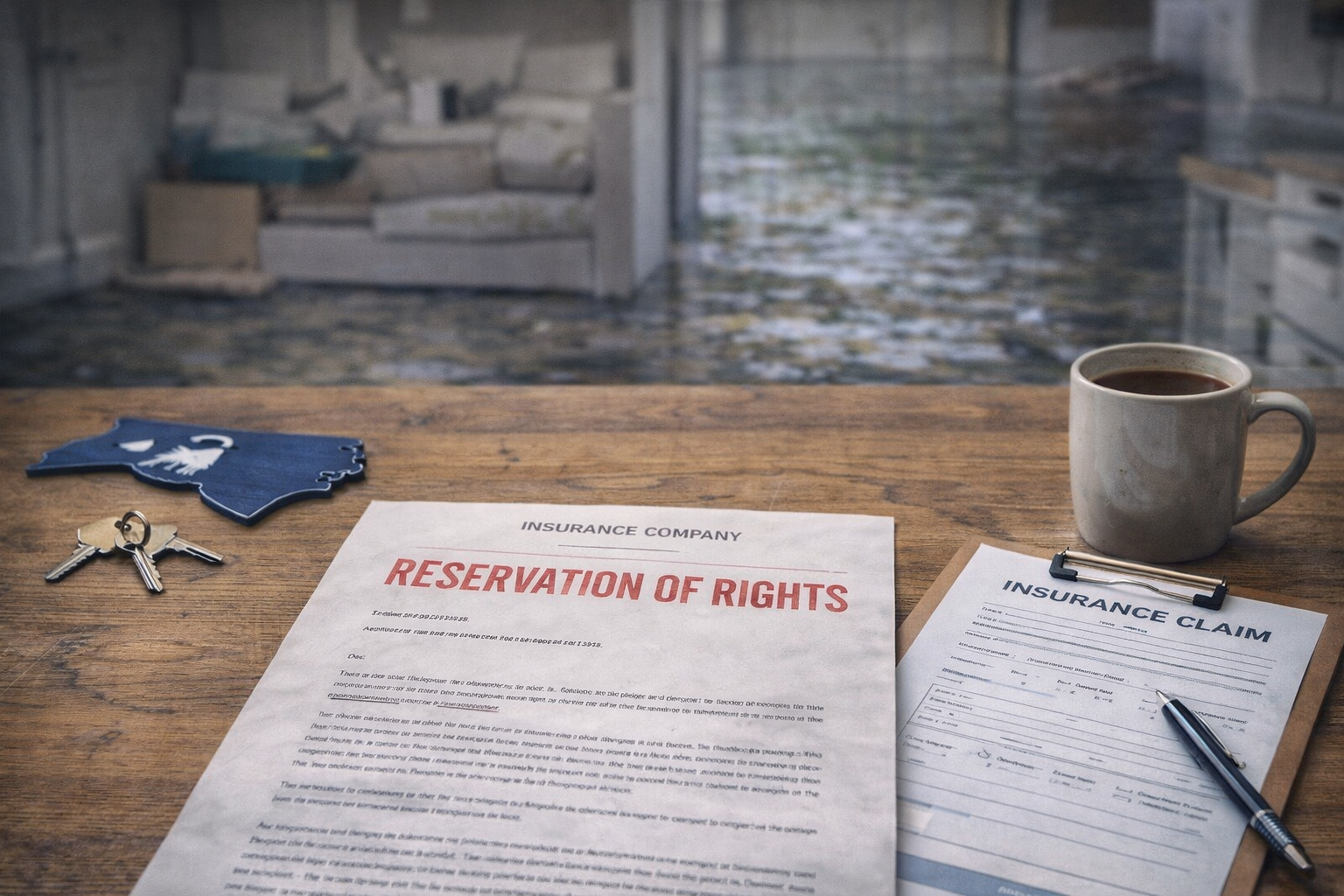
You filed your property damage claim: storm damage, fire, water, vandalism and waited for your insurance company to respond. Instead of a payment, you received a letter with a phrase that stopped you cold: "Reservation of Rights."
Most South Carolina homeowners have never heard this term before. It sounds formal and legal, and it is. A Reservation of Rights letter is one of the most misunderstood documents in the insurance claims process and one of the most important. Ignoring it or misunderstanding what it means can seriously damage your ability to recover what you're owed.
This guide explains exactly what a Reservation of Rights letter means, why insurers send them, what your rights are as a South Carolina homeowner, and what steps you should take immediately after receiving one.
A Reservation of Rights (ROR) letter is a formal notice from your insurance company stating that while they are continuing to investigate or process your claim, they are not yet agreeing that your claim is covered under your policy. In other words, your insurer is saying:
"We're looking into this but we're not promising to pay it, and we're not giving up our right to deny it later."
The letter allows the insurer to investigate, defend, orprocess your claim without waiving their right to later deny coverage based on policy exclusions, conditions not met, or other grounds. It is, in essence, a legal protection for the insurance company and a warning signal for you.
Importantly, an ROR letter is not a denial. It does not mean your claim will be rejected. But it does mean your insurer has identified one or more issues that could affect coverage and you need to take it seriously.
Insurers send ROR letters for a range of reasons. Some areroutine; others are more serious. Common reasons South Carolina homeowners receive these letters include:
Your insurer may believe that some or all of the damage falls under an exclusion in your policy such as flooding, earth movement, wear and tear, or intentional acts. The ROR letter puts you on notice that they are investigating whether exclusions apply before making a coverage decision.
Most homeowners policies require "prompt notice" of a loss. If there was a delay between when the damage occurred and when you filed the claim even for legitimate reasons, the insurer may send an ROR letter while they evaluate whether the late notice affects coverage.
When the origin or cause of the damage is unclear or disputed particularly in fire claims, water damage claims, or vandalism claims the insurer may send an ROR while they complete their investigation into what actually happened.
If the insurer suspects a misrepresentation on the policy application, a violation of the policy's conditions (such as vacancy of the property), or other issues that could affect coverage, an ROR letter is often the first formal step in that investigation.
Some claims involve multiple types of damage some covered, some potentially not. An ROR allows the insurer to process the covered portions of a claim while continuing to investigate whether other portions are covered.
Given how alarming the letter can feel, it's worth being clear about what it does not mean:
• It does not mean your claim has been denied
• It does not mean your insurer has concluded you did anything wrong
• It does not mean you should stop cooperating with the claim process
• It does not mean you have lost any of your policyholder rights
What it does mean is that your insurer has put a legal marker down and you should do the same by consulting an attorney immediately.
South Carolina law provides strong protections for homeowners navigating insurance disputes. Here is what you're entitled to:
• A written explanation: Your insurer must clearly identify in the ROR letter the specific policy provisions, exclusions, or conditions they believe may affect coverage. Vague or generic ROR letters may not be legally sufficient.
• The right to independent legal counsel: When aninsurer sends an ROR letter, it signals a potential conflict of interest. You have every right to retain your own attorney separate from any attorney your insurer appoints to protect your interests.
• Protection against bad faith: Under S.C. Code §38-59-40, if your insurer unreasonably refuses to pay a valid claim within 90 days of a written demand, they may be liable for your attorney's fees. An unjustified or improperly handled ROR can be part of a bad faith claim.
• The statute of limitations: Under S.C. Code §15-3-530, you have three years to bring a claim for breach of contract against your insurer. The clock does not restart just because you received an ROR letter.
1. Readit carefully every word. The ROR letter should identify specific policy provisions the insurer believes may affect coverage. Understanding exactly what they are reserving rights on tells you what they're investigating.
2. Contactan insurance claim attorney. This is the single most important step. An attorney can assess whether the ROR is legally sound, identify whether your insurer is overreaching, and begin building your response.
3. Continue cooperating with your insurer. Do not stop engaging with the claims process after receiving an ROR. Failing to cooperate can give your insurer additional grounds to deny your claim. Your attorney will guide you on what to provide and what to withhold.
4. Document everything. Keep copies of the ROR letter, all correspondence, your policy, damage documentation, contractor estimates, and any other claim-related records.
5. Don't sign anything without legal review. If your insurer asks you to sign any document following an ROR letter, have your attorney review it first. Releases, acknowledgments, and settlement agreements can permanently affect your rights.
Receiving an ROR letter doesn't mean you've lost. It signals that your claim has entered a critical stage where the insurer is closely scrutinizing your file and making decisions that could impact your payout.
Homeowners who succeed are those who treat the ROR letter as a call to action, get prepared, get documented, and secure experienced legal representation.
Property People Law works with South Carolina policyholders at precisely this stage before denial. We offer free case evaluations and handle disputes on contingency, meaning no fees unless we recover compensation for you.
📞 Call us: (844) 776-7364
✉️ Email: info@propertypeoplelaw.com
🔗 Free case review: propertypeoplelaw.com/sc-insurance-claim